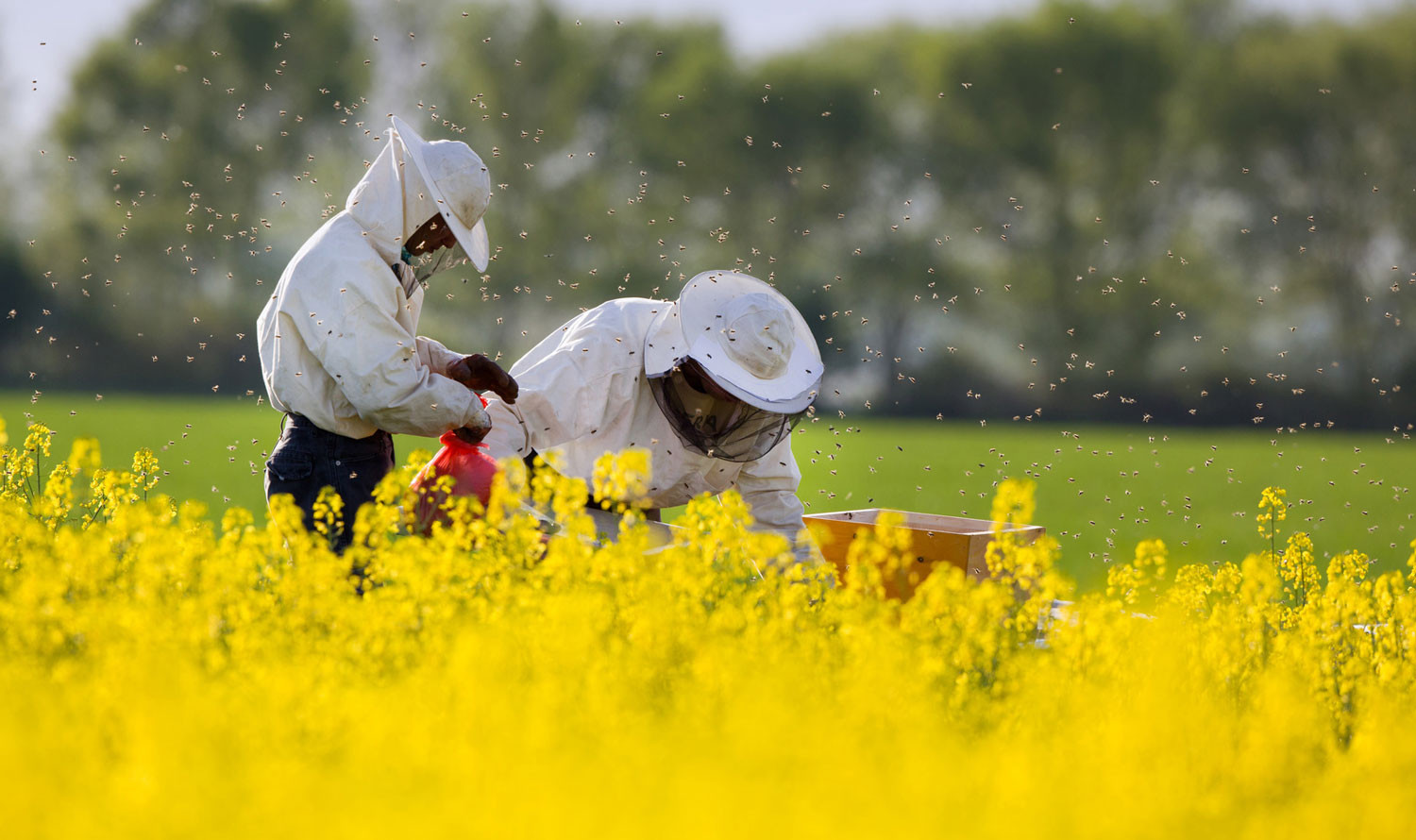


Understanding Robbing in Honey Bees

Robbing is a complex behaviour that involves more than the visible loss of a colony’s food stores. It should not be underestimated, as its consequences can be serious for the affected colony and for the health of the apiary as a whole. This article explains how robbing develops, how foreign bees are recognised, and which measures can help prevent or stop it.
In brief
Robbing — the removal of one colony's stores by the bees of another colony — is among the most feared phenomena in the apiary. Open robbing has long been described, but its early phases, its barely visible forms and certain assumed mechanisms remain poorly characterised experimentally. This article sets out what the literature actually establishes, what it merely renders plausible, and what still rests on field interpretation.
Four findings structure the whole.
Robbing is a foraging tactic, not a separate behaviour. It draws on ordinary foraging mechanisms, notably the discovery and assessment of resources. Recruitment to contested resources is well supported, but the full sequence leading to the collective robbing of a living colony is less directly documented. What changes is the nature of the source — concentrated, but defended — and the risk tolerance associated with the seasonal context (Rittschof & Nieh, 2021; Treanore et al., 2025).
Defence at the hive entrance is a filter, not a barrier. Guard bees adjust their acceptance threshold to the risk of the moment and inevitably make errors in both directions. The presence of a foreign bee in a hive therefore does not prove robbing (Downs & Ratnieks, 2000; Couvillon et al., 2013; Pradella et al., 2015).
The consequences go beyond the loss of honey. That loss is the most immediate one, but it has rarely been quantified under controlled conditions. Among the health-related consequences, the best documented are the transfer of Varroa destructor during the robbing of collapsing colonies (Peck & Seeley, 2019) and the spread of American foulbrood spores over short distances (Lindström et al., 2008). The level of evidence varies considerably depending on the pathogen concerned, and the routes by which varroa mites move between colonies remain debated.
Prevention acts mainly on three levers: the attractiveness of the source, its accessibility and the colony's capacity to defend itself. Measures acting on these three points are consistent with known mechanisms, but not all of them have been quantified separately in controlled trials.
Two common notions are examined critically. "Silent robbing" is a descriptive term arising from practice, not an experimentally defined behavioural category. The hypothesis of regular food removal by trophallaxis through a mesh floor — or open mesh floor — is physically conceivable, but it has to date been demonstrated neither in the apiary nor under comparable controlled conditions.
Every statement is linked to its level of evidence. Where the data do not allow a conclusion, this uncertainty is stated explicitly rather than concealed behind an over-assertive formulation.
1. What robbing is — and what it is not
 |
Defining robbing precisely and distinguishing it from drifting, orientation flights, trophallaxis and the mere presence of foreign bees. |
In beekeeping, robbing refers to the removal of a colony's food stores by bees from another colony. Robber bees enter a foreign hive, gain access to the honey or syrup stored there, fill their crop and then return to their colony of origin. The current literature regards robbing as a foraging strategy that is both risky and potentially highly profitable, since a hive's stores constitute an abundant and concentrated food source, though one generally defended by the workers of the attacked colony (Rittschof & Nieh, 2021; Wang et al., 2025).
Robbing is therefore not a behaviour wholly distinct from foraging. For the bees that exploit it, a foreign colony becomes a food source. The essential difference from a floral resource is that this food lies inside another colony's nest and that removing it may lead to confrontation. Colonies engaged in robbing may simultaneously mobilise more workers for food collection and for their own defence, because the conditions favouring robbing also increase the risk of being attacked themselves (Grume et al., 2021).
A few isolated attempts may precede more substantial exploitation. A bee may explore the walls of a hive, search for an opening or briefly enter a foreign colony. If it succeeds in reaching the stores and returning several times, the number of visitors may gradually increase. The literature nevertheless offers no universal threshold determining from how many visits, what quantity removed or what number of bees an interaction should formally be classed as robbing (Rittschof & Nieh, 2021; Wang et al., 2025).
The mere presence of a foreign bee in a hive is therefore not sufficient to conclude that robbing is taking place. Several behaviours must be distinguished that may look alike when observed in front of a hive.
1.1. Robbing is not drifting
Drifting refers to a bee entering a colony that is not its own, generally without any intentional search for that colony's stores. It is frequent in apiaries where colonies are arranged in regular rows, with similar hives and entrances facing the same direction. Hive position, visual appearance and various environmental factors strongly influence the frequency and direction of these homing errors (Pfeiffer & Crailsheim, 1998).
A drifting bee may be a young worker that erred during an orientation flight, or a forager returning to the wrong hive. It may arrive laden with nectar or pollen and be tolerated by the receiving colony. Substantial proportions of foreign workers may thus be present in certain colonies of an apiary without this necessarily constituting robbing (Pfeiffer & Crailsheim, 1998).
The main difference therefore concerns the function of the movement and the direction of food transport. A drifting bee accidentally enters another colony and may even bring it a load. A robber bee goes to a foreign colony in order to extract stores from it. In practice, this distinction is not always immediately observable. A foreign bee accepted into a hive must therefore not automatically be regarded as a robber.
1.2. Robbing is not an orientation flight
Young bees perform flights in front of their hive in order to memorise the nest site and the landmarks of its surroundings. These flights can generate intense activity in front of the alighting board. The bees generally describe arcs or circles while facing the hive, then gradually move away.
The flight of a robber bee may likewise appear hesitant or irregular. Free (1955) showed, however, that the swaying flight characteristic of robbers in front of the entrance is triggered by the presence of a group of guards or by congestion at the entrance, and not simply by being in front of a foreign colony. This behaviour is analysed in more detail in section 2.4.
An isolated flight behaviour therefore does not allow a firm diagnosis. Repeated entry attempts, searching along the walls, the guards' reactions and, as far as possible, the direction of food transport must also be observed.
1.3. Robbing is not trophallaxis
Trophallaxis is the transfer of liquid food from one individual to another, generally through contact between the mouthparts. In the honey bee it ensures the distribution of nectar, honey and certain glandular secretions among the members of the colony. It also contributes to the transmission of information on the availability and quality of food resources (Crailsheim, 1998).
A bee may beg food from another worker and receive a small quantity of it. This contact does not in itself constitute robbing. To speak of the food exploitation of a foreign colony, it would have to be demonstrated that such transfers lead to a repeated outflow of food for the benefit of individuals or of a colony outside the nest.
This distinction matters for the hypothesis that foreign bees might obtain food through a mesh floor. Trophallactic exchanges through a barrier are physically possible under certain experimental conditions, but this does not yet prove that they occur between foreign bees beneath a hive, nor that they represent a quantitatively important form of robbing. This question is examined in sections 4.3 and 4.6.
1.4. A foreign bee is not always rejected
Guard bees use both the odour and the behaviour of bees arriving at the entrance to decide whether to accept or repel them. This recognition system is neither fixed nor infallible: the acceptance threshold shifts according to the risk of the moment, more restrictive during a dearth, more permissive when nectar becomes abundant again (Downs & Ratnieks, 2000). Section 3.4 sets out this mechanism in detail.
In their classic study of behaviour at the hive entrance, Butler and Free (1951) observed that bees recognised as robbers were mainly identified by their behaviour, whereas other intruders were identified chiefly by their odour. Some non-robbing intruders adopted a submissive attitude: they halted their advance, allowed themselves to be examined and could offer food to the guards. As long as they remained submissive they were generally not stung, and some were eventually accepted after two to three hours in the foreign colony (Butler & Free, 1951).
These results do not show that robbers obtain food by begging it from the guards. In the situation described it is, on the contrary, the intruder that offers part of the contents of its crop. Nor do they demonstrate that offering food constitutes a systematic strategy for getting past a colony's defences. Above all, the study shows that the fate of a foreign bee depends on its behaviour, its odour and the colony's state of alert.
1.5. What does "silent robbing" mean?
The expressions "silent robbing", "discreet robbing" or "insidious robbing" are used in beekeeping to describe a presumed loss of food without evident fighting, without significant mortality in front of the entrance and without a mass arrival of bees. They may refer to repeated visits by a small number of individuals, to an early phase of robbing, or to exploitation that long goes unnoticed.
The main scientific reviews devoted to robbing, however, offer no standardised experimental definition of discreet robbing, nor criteria allowing it to be distinguished with certainty from drifting, from the acceptance of foreign bees or from an initial phase of robbing (Rittschof & Nieh, 2021; Wang et al., 2025). It is therefore currently a descriptive term arising from practice rather than a demonstrated behavioural category.
Some observations attributed to discreet robbing could equally be explained by drifting directed towards particular hives, by the integration of foreign workers, by higher internal consumption than expected, or by an imprecise estimate of the stores. Conversely, the absence of visible fighting does not rule out the possibility that a few foreign bees are indeed removing honey.
In this article, the term robbing refers to the removal of food stores from a foreign colony. The expression discreet robbing is used as a descriptive term, without the status of an established behavioural category, to designate a presumed or observed removal that remains barely visible. Where the data do not allow a clear distinction between genuine food extraction, drifting, the admission of foreign bees or a trophallactic contact, this uncertainty is explicitly flagged.
2. How robbing arises and intensifies
 |
Understanding how an accessible resource, a dearth, recruitment and colony defence can turn a few visits into collective robbing. |
Robbing does not generally begin with the sudden arrival of hundreds of bees in front of a hive. It develops rather from the discovery of a concentrated food source, from initial attempts to gain access, and from visits that are repeated once the bees manage to remove honey or syrup. If the source remains accessible and the attacked colony's resistance is insufficient, the number of robber bees can increase rapidly.
This sequence appears logical, but not all of its stages have been studied with the same precision. The effects of dearth, the behaviour of robber bees, the adaptation of guard bees and the coordinated changes within the robbing colony are relatively well documented. Much less well understood is exactly how an initial discovery turns, under apiary conditions, into mass robbing.
2.1. Dearth changes the value placed on risk
Robbing occurs above all when the available floral resources decline. During an abundant nectar flow, foragers can exploit accessible nectar sources without confronting the workers of another colony. During a dearth, the honey stores of a foreign hive become comparatively more attractive despite the risks of injury or death associated with removing them (Rittschof & Nieh, 2021).
Recent work shows that seasonal resource scarcity does not only change the sources visited. It also influences how bees assess danger. Treanore et al. (2025) found that during a period of seasonal scarcity, foragers were more persistent at a contested resource and less often produced the inhibitory signals that normally limit recruitment to a dangerous source. The seasonal context in which robbing becomes more frequent is thus accompanied by an increase in risk tolerance. The study concerned a contested resource and not an attack on a living colony; it documents the conditions of the shift, not the complete sequence.
Dearth is nevertheless not sufficient to trigger robbing automatically. It creates a favourable context in which bees explore alternative sources more and accept higher risks. For robbing to develop, a colony or a store must additionally be detectable, accessible and insufficiently defended.
2.2. The discovery of an accessible source
A colony's stores constitute a particularly rich resource: the nectar has already been collected, concentrated and, in the case of ripe honey, stored in the combs. For a robbing colony, this food can represent a considerable gain, provided the workers can reach it and return to their own hive (Grume et al., 2021; Rittschof & Nieh, 2021).
In beekeeping practice, the risk increases notably when honey, syrup or wet combs are left accessible, when liquid feed leaks, or when an intervention releases a strong food odour. These factors are regularly mentioned in reviews of robbing, but their individual components — odour, food concentration, physical accessibility and bee activity — have rarely been isolated in controlled trials under apiary conditions (Wang et al., 2025).
The discovery of a vulnerable colony should therefore not be reduced to the smell of honey alone. Bees may be drawn to an area where food is detectable, but they must then find a way in. They may inspect the entrance, the corners of the hive, the joints between components, the roof or the floor. An attractive odour without any possibility of entry may lead to prolonged searching without necessarily resulting in food extraction.
The work of Napier et al. (2023) also shows that the nature of the food is not sufficient to explain the behavioural changes associated with robbing. In their experiment, whether the foragers visited raw honey or a sucrose solution had little influence on their subsequent interactions with guards. The best predictor of increased aggression was the conflict experienced at the food source. This result suggests that the social and defensive experience gained during removal is at least as important as the type of food collected.
2.3. From first visits to recruitment
When a bee finds a profitable source, it may return to it and recruit nestmates using the usual communication mechanisms of foraging. Robbing thus uses capacities that already exist for exploiting flowers, water or other resources. The source is unusual, but the bees exploiting it remain foragers acting to provision their colony (Rittschof & Nieh, 2021).
The work of Treanore et al. (2025) indicates that foragers continue to recruit to contested resources despite the aggression they encounter there. During a dearth they produce fewer stop signals, which normally serve to reduce recruitment to a dangerous source. This weakening of the collective brake may favour the persistence of exploitation.
Caution is nevertheless required. The waggle dance is a general mechanism of recruitment to food sources, but the full transition from a first successful visit to a collective attack on a living colony remains poorly documented by continuous observation. There is as yet no precise number of successful visits, dances or recruited bees beyond which robbing would become inevitable.
The progression probably depends on several interacting factors:
- the quantity and quality of the accessible food;
- the ease with which the first bees can enter and leave;
- the attacked colony's capacity to detect and repel intruders;
- the number of foragers available in the robbing colony;
- the presence or absence of other resources in the environment;
- the experience of conflict at the source.
Recruitment can thus create a reinforcing loop: a first bee discovers the source, others join it, removal increases, and the resource becomes a significant component of the colony's foraging activity. But this progression may also be interrupted if the guards repel the intruders, if access is closed off, or if a more rewarding floral resource becomes available.
2.4. The characteristic behaviour at the hive entrance
Robber bees are often described as hesitant, nervous or swaying in front of the entrance. Free (1955) studied this swaying flight experimentally. His observations show that it is not simply a behaviour triggered by being in front of a foreign hive.
In the absence of congestion at the entrance, foragers entered a hive other than their own without hesitation in order to collect honey or syrup, even when a colony was present inside. Swaying flight appeared above all when a group of bees, notably guards, obstructed the entrance. Free concluded that this behaviour constitutes an innate reaction to the risk of encounter and to the difficulty of entering, rather than a conscious recognition of the hive as foreign (Free, 1955).
This nuance matters for diagnosis. Swaying flight is a useful indicator of robbing attempts when bees are seeking to avoid or get past a defence. Its absence, however, does not allow food removal to be ruled out. If a bee finds a poorly guarded entrance or another access point without meeting opposition, it may enter directly without displaying the behaviour typically expected of a robber.
Guards do in fact recognise robbers partly by the way they approach and attempt to enter the hive. They then complete this assessment with an olfactory examination (Butler & Free, 1951; Free, 1955). Hesitant behaviour is therefore both a consequence of the defence and a signal that may attract the guards' attention.
2.5. A rapid reaction by the attacked colony
A colony's defence is not constant: it adapts to the level of threat. During a dearth, when robbing is intense, guards become markedly less permissive towards foreign bees; when nectar flow conditions improve, they gradually accept more arrivals (Downs & Ratnieks, 2000). This adaptation can also occur within a few minutes (Couvillon et al., 2008). Both studies are set out in detail in sections 3.1 and 3.4.
What matters here is that a colony does not distinguish all the bees presenting themselves perfectly and without cost. When risk increases, it lowers its acceptance threshold and repels more individuals, at the price of a higher number of errors against its own workers. Defence must therefore strike a balance between two risks: letting a robber in or rejecting a bee of the colony.
2.6. Robbing also transforms the robbing colony
Robbing does not concern only a few specialised foragers. It is accompanied by coordinated changes in several groups of workers. Grume et al. (2021) showed that colonies engaged in a robbing situation simultaneously increased their foraging activity and their defence at the entrance.
This result may seem paradoxical: a colony mobilises more foragers to attack a foreign resource while at the same time strengthening its own protection. But the conditions that make a colony liable to rob — notably resource scarcity and competition — also increase the risk of its being attacked itself. The colony therefore adjusts collection, resource processing and nest defence in parallel.
The guards of robbing colonies were notably more aggressive towards their own foragers returning from the robbed source. The odour changes caused by contact with foreign combs were not sufficient to explain this reaction. The robber bees themselves displayed more aggressive behaviour, liable to trigger a response from the guards of their own colony (Grume et al., 2021).
Napier et al. (2023) refined this mechanism by showing that conflict experienced at the resource was a better predictor of this aggression than the nature of the liquid collected. Robbing thus appears as a coordinated set of behavioural changes — increased foraging activity, risk tolerance, forager aggression and guard vigilance — rather than as the simple movement of a few bees towards a honey source.
2.7. Is there a tipping point?
In practice, robbing often gives the impression of crossing a threshold: a few bees first explore the hive, then activity increases abruptly and becomes hard to control. The available results make such a dynamic plausible. Recruitment can increase the number of robbers, while their arrival prompts the attacked colony to strengthen its defence. This defence generates more conflict and congestion, which in turn alters the behaviour of the robber bees and of the guards.
There is, however, no universal tipping point demonstrated experimentally. The threshold probably depends on the strength of both colonies, on the size and location of the openings, on the value of the resource, on the availability of other food sources and on the number of bees already engaged.
It is therefore more accurate to describe robbing as a process of progressive reinforcement that can accelerate rapidly. Some attempts fail or remain limited. Others reach a dynamic in which the recruitment of robbers exceeds the attacked colony's capacity to defend itself. From that moment on, the loss of stores, the weakening of the defenders and the arrival of new robbers can sustain one another.
Distinguishing these stages is essential: a bee inspecting a hive does not yet constitute a collective attack, but every successful entry may increase the probability of escalation. This is why the first attempts and accessible food sources are of particular importance, even when the colony does not yet show the spectacular signs of open robbing.
3. Guard bees, recognition and tolerated intruders
 |
Explaining how guards assess arriving bees, why their recognition remains imperfect, and under what conditions intruders may be tolerated. |
Defence against robbing rests largely on the guard bees stationed at the entrance. Their function is not, however, comparable to permanent and infallible screening. The number of guards, their level of vigilance and their willingness to accept or repel a bee vary with the colony's situation. Recognition moreover rests on a combination of behavioural and chemical cues, without allowing a perfect distinction between members of the colony and outsiders.
This flexibility is indispensable. An overly permissive colony risks letting robber bees in. Conversely, an excessively strict defence would lead to the rejection of its own foragers. Guards must therefore continually adjust their response to the risk of the moment.
3.1. Guarding activated according to danger
Not all colonies permanently maintain a large number of guards at the entrance. Butler and Free (1951) observed that guards became visible above all when the colony had been put on alert, notably by the presence of robber bees or by the repeated arrival of stray bees from other colonies.
Guards intercept bees landing on the alighting board or attempting to pass the entrance. They may approach the arriving bee, touch it with their antennae, examine its body and sometimes seize it with their mandibles. If the bee is considered dangerous, this interaction may escalate into a fight or a sting. If it is recognised as a member of the colony, or if it does not exceed the rejection threshold, it is allowed to enter.
The mobilisation of guards can be very rapid. Couvillon et al. (2008) induced a sudden increase in the number of foreign bees in front of colonies. Within fifteen minutes the guards became less permissive, the number of fights per guard increased, and more foreign bees were rejected. The colony's own workers also suffered more rejections. Defence therefore intensifies rapidly, but at the price of a greater number of errors against the hive's own bees.
3.2. Behaviour and odour provide different information
The historical work of Butler and Free (1951) suggests that guards do not assess all arriving bees in the same way. Robber bees were mainly recognised by their behaviour when attempting to enter, whereas other foreign bees were identified chiefly from their odour.
A robber meeting a congested or defended entrance may hesitate, move sideways, back off or try to break free when a guard intercepts it. These reactions help to make it suspect. Free (1955) showed that guards quickly recognised would-be robbers by the way they approached the entrance, and then confirmed their assessment by an olfactory examination.
Behaviour is therefore not merely a consequence of confrontation. It becomes itself a source of information used by the guards. A bee heading straight inside and behaving like a returning forager may be treated differently from a hesitant bee attempting to circumvent the checks.
Odour nevertheless remains decisive in distinguishing members of the colony from other bees. In trials conducted at the entrance, Downs and Ratnieks (1999) showed that guards relied mainly on cues acquired in the colony environment rather than on genetic relatedness. Related bees reared in another colony were accepted no more readily than unrelated outsiders. Under these natural conditions, what mattered above all was the odour acquired during life in the hive.
3.3. A chemical signature carried by bees and combs
The body surface of bees is covered by a complex mixture of lipid substances, among them the cuticular hydrocarbons. These compounds help notably to limit water loss, but some also provide information useful for social recognition.
Not all cuticular hydrocarbons play the same role. Dani et al. (2005) experimentally modified the chemical profile of foragers before returning them to their colony's entrance. Bees to which alkenes had been added were generally attacked more intensely than those treated with alkanes. Alkenes thus appear to constitute a particularly informative part of the signature used by guards, even if recognition probably does not depend on a single substance (Dani et al., 2005).
The colony's odour is not, however, produced by the bees alone. The wax combs also act as a source and a carrier of recognition cues. D'Ettorre et al. (2006) exchanged combs between colonies. After this exchange, guards became more tolerant towards the foragers of the colony whose combs they had received. In a first replicate, acceptance of the outsiders concerned rose from 3 to 23%, and in a second from 8 to 47%. The effect gradually faded over the course of three weeks.
Chemical analyses showed that the cuticular profiles of workers from colonies that had exchanged combs had become more similar. The smaller the chemical distance between two groups, the more likely their workers were to be accepted. Combs therefore contribute to forming and homogenising the colony's signature (D'Ettorre et al., 2006).
This colony signature must nevertheless be distinguished from the momentary odour of the food being carried. Downs et al. (2001) fed colonies either with an odourless syrup or with diluted heather honey. The fact that two colonies received food with a similar odour did not increase the mutual acceptance of their workers. Guards therefore do not appear simply to classify arriving bees according to the odour of the honey they carry.
3.4. A decision based on an acceptance threshold
Guards probably do not possess an absolute representation allowing them to classify each arriving bee as "member" or "outsider". They rather compare the information perceived with a reference signature and react when the difference exceeds a certain threshold.
This threshold is variable. During a dearth, when contacts with robber bees are frequent and accepting an outsider may prove costly for the colony, guards become more restrictive. In the study by Downs and Ratnieks (2000), at the start of the observation period they accepted around 80% of the bees of their own colony, but only 25% of the outsiders introduced experimentally.
When the nectar supply improved, robbing and the intensity of guarding declined. Guards gradually became more permissive towards both categories of bees, to the point of accepting practically all arrivals. Screening at the entrance therefore reflects an assessment of the ecological risk of the moment rather than a fixed rule (Downs & Ratnieks, 2000).
This flexibility explains an apparent paradox: a foreign bee may be rejected one day and admitted the next, without its origin or genetic constitution having changed. It is the level of threat, nectar availability, the frequency of intrusions and the colony's state of alert that alter the decision.
3.5. Recognition inevitably produces errors
Perfectly accurate recognition would be difficult to achieve, since individual chemical signatures vary, change with age and are influenced by the colony environment. A guard must moreover decide quickly, amid sometimes intense traffic.
Pradella et al. (2015) combined observation of guards' decisions with genetic identification of the foragers. In the three colonies studied, the mean error rate reached 14%. These errors included both the acceptance of an outsider and the rejection of a bee that actually belonged to the colony. Cuticular hydrocarbon profiles were correlated with acceptance and rejection decisions, but no profile allowed perfect recognition (Pradella et al., 2015).
The context in which recognition is tested strongly influences the results. Couvillon et al. (2013) compared guards' decisions at the entrance, in experimental arenas and inside the colony. In the honey bee, total errors amounted to 30.9% at the entrance, against 60 to 86% in the artificial arenas. Even the collective screening carried out inside the hive by some thirty workers did not eliminate all errors.
These results show that the entrance provides a particular context that improves discrimination. The guard's position, the colony's odour, the direction of bee traffic and the entry behaviour of arriving bees may all contribute to the decision. An experiment conducted in a small cage or away from the hive therefore does not necessarily reproduce recognition as it functions in a real colony (Couvillon et al., 2013).
3.6. Dominant and submissive bees
Butler and Free (1951) distinguished bees recognised as robbers from other intruders. Among the latter, some adopted what was described as a dominant attitude. These were often laden foragers that advanced without hesitation and could enter the hive despite their foreign origin.
Other intruders adopted a submissive attitude. When a guard intercepted them, they ceased to advance, remained motionless and allowed themselves to be examined or handled roughly. During this interaction they could offer food to the guards. If this offer was refused, they performed a movement with the tongue that the authors interpreted as a displacement activity. Some even entered a state of complete immobility.
As long as an intruder maintained this submissive attitude, it was generally not stung. By contrast, intruders — including robbers — that tried to tear themselves away from the guard risked being seized and stung. The authors also reported that intruders other than robbers that managed to remain two to three hours in the foreign colony could subsequently be accepted there (Butler & Free, 1951).
These observations must be interpreted precisely. They do not demonstrate that robber bees systematically use a submissive attitude to get past defences. Nor do they show that an outsider receives food from the guards: in the situation described, it is the outsider that offers food to them. The functional role of this offer — appeasement, a consequence of handling, or a simple behavioural reaction — has not been established experimentally.
The distinction proposed by Butler and Free nevertheless remains important. A foreign bee, a stray forager and a robber bee are not necessarily treated in the same way. The behaviour displayed during interception may alter the outcome of the check.
The intruder offers food — it does not receive any
What Butler and Free observed. Some non-robbing intruders adopted a submissive attitude and could offer part of the contents of their crop to the guards.
What the study does not show. It demonstrates neither that robber bees beg for food, nor that giving food constitutes a systematic strategy for getting past defences.
Cautious interpretation. The intruder's behaviour may alter the outcome of the check, but the exact function of the offer — appeasement, a consequence of handling, or another reaction — has not been established experimentally.
3.7. What the guarding system means for robbing
Defence at the entrance constitutes an effective filter, but not an absolute barrier. It performs particularly well when a colony is on alert and arriving bees must pass through a clearly identified entrance. It becomes more permissive when risk is low, and produces more errors when the intensity of intrusions forces guards to tighten their decisions rapidly.
Several conclusions can be drawn from this:
- the presence of a foreign bee inside a hive does not, on its own, constitute proof of robbing;
- some outsiders are admitted because of a recognition error or a momentarily permissive acceptance threshold;
- the behaviour of an arriving bee may be as important as its odour;
- the recognition signature depends notably on cuticular hydrocarbons and on the wax combs;
- the odour of the food carried is not sufficient to explain the acceptance of an outsider;
- an increase in robbing risk leads to stricter defence, but also to more erroneous rejections of the colony's own foragers.
Finally, most of this knowledge concerns the entrance, that is, the place where guards have the most favourable context for recognising arriving bees. It cannot automatically be assumed that the same level of screening exists at a crack, at a joint between hive components or at a mesh floor. This does not prove that these areas are used for robbing, but it justifies distinguishing guarded access points from other possible points of contact.
4. Discreet robbing, trophallaxis and the mesh floor hypothesis
 |
Assessing separately what is demonstrated, plausible or still unknown regarding discreet robbing and contacts through a mesh floor. |
Open robbing is relatively easy to recognise when it is accompanied by an influx of bees, fighting and a rapid loss of stores. The situation becomes harder to interpret when only a few foreign bees are observed, when confrontations remain rare, or when bees gather beneath a hive fitted with a mesh floor.
Several different behaviours may then be confused: an early phase of robbing, the drifting of workers, the acceptance of foreign bees, the search for a way in, direct access to small food residues, or a trophallactic interaction. Available knowledge allows it to be established that certain mechanisms are biologically possible, but it does not yet demonstrate that they actually follow on from one another under hive conditions.
4.1. Trophallaxis: begging, offering and passing on food
Trophallaxis is the transfer of liquid food from one bee to another through contact between their mouthparts. It allows foragers in particular to hand over collected nectar to the bees of the hive, and then allows food to circulate between different groups of workers. It does not serve only to distribute nutrients: it also conveys information on the odour, quality and availability of the resources exploited by the colony (Crailsheim, 1998).
Two behaviours must be distinguished. A bee may offer food by presenting a droplet between its mandibles, or it may beg from another bee in order to receive some. Free (1956) showed that these two responses are largely innate. They are mainly directed towards the head of the other bee. Head odour and antennal contact play an important role in triggering begging and offering. Heads from bees of the same colony elicited these behaviours more readily, without the responses being absolutely restricted to members of the colony (Free, 1956).
Nutritional need strongly influences begging. Foragers faced with an uncertain or variable source beg food samples from other foragers more frequently. The majority of these contacts last less than a second. Such a short duration probably allows mainly for tasting or identifying a small quantity of food, rather than for filling the crop (De Marco & Farina, 2003).
A very brief contact between two bees therefore does not necessarily constitute a genuine, substantial food transfer. It may be an attempt to beg, an exchange of chemical information, or the receipt of a minimal sample. This nuance is essential when attempting to interpret contacts observed near a mesh.
4.2. Trophallaxis is not absolutely reserved for members of the colony
Trophallaxis normally occurs within the colony. It is favoured by the familiar cues of hive bees, but the system can sometimes be triggered or exploited by organisms that are not part of it.
The small hive beetle, Aethina tumida, provides a particularly instructive example. This parasite can beg food from workers by touching their mouthparts with its antennae. It sometimes succeeds in obtaining a droplet of food even though it is recognised as foreign and may be subjected to aggressive reactions. This begging behaviour is partly innate and does not depend on the beetle being accepted as a member of the colony (Neumann et al., 2015). Later experiments have shown that workers can also supply these beetles with protein-rich glandular secretions normally intended notably for the larvae and the queen (Langlands et al., 2021).
These observations demonstrate that a foreign organism can, under certain conditions, trigger a bee's food-giving response. They do not, however, prove that a foreign bee could obtain food with the same ease, nor that this behaviour plays a role in robbing. The small hive beetle possesses a specialised begging behaviour resulting from its adaptation to life in bee colonies.
This mechanism should also not be confused with the observations of Butler and Free (1951). In their study of intruders intercepted at the entrance, a submissive foreign bee offered food to the guards while it was being examined or handled roughly. It was not begging for food. This observation is therefore not evidence that robber bees are fed by the colony they visit.
4.3. Can a food exchange pass through a mesh?
The physical possibility of a transfer through a mesh has been demonstrated in an experimental set-up. Smith (2012) placed old bees and young bees in separate cages in order to study the transmission of Nosema ceranae. When the two groups were separated by a single mesh of 1.5 mm aperture, the bees could pass food to one another. When two meshes were spaced 0.6 to 1.0 cm apart — a distance greater than the length of the proboscis — this transfer was no longer possible.
After exposure, 40.8% of the young bees separated by a single mesh were infected, against 3.4% in the two-mesh set-up and 2.8% in the isolated controls. The protocol did not allow other routes of contamination — notably faecal–oral or airborne — to be entirely excluded, but the author directly observed young bees receiving food by trophallaxis through the single mesh (Smith, 2012).
Three features of the set-up nevertheless limit its transposition to a hive floor. The bees belonged to an artificial system in which both groups were constrained to remain in immediate proximity to the mesh and in which they were in fact observed clustering at it. Above all, in the single-mesh treatment the young bees' food had been withdrawn for three days, which forced them to beg from the old bees. Finally, the two groups came from the same colony: the set-up therefore did not test an exchange between bees foreign to one another.
Finkelstein and Amdam (2018) also showed, in cages divided by a mesh, that bees deprived of direct access to the feeder could be provisioned through the social trophallaxis chain. Their set-up differs from Smith's on one essential point, however: the bees came from three different colonies and had been deliberately mixed in order to eliminate colony effects. It therefore likewise did not test an interaction between members of a colony and foreign bees, but food redistribution within an artificial social group. The bees used were moreover of pre-forager age.
The scope of these results must therefore be stated precisely. Bees kept within the same social set-up and placed immediately on either side of a mesh can exchange food: in Smith's case these were groups from the same colony; in Finkelstein and Amdam's, mixed bees from several colonies. Neither set-up tested the exploitation of a foreign colony at a mesh floor, nor brought together bees that recognised one another as foreign. It is therefore not known whether foreign bees and hive bees spontaneously adopt this position beneath a hive.
4.4. "Silent robbing": a practical description rather than a defined category
The term discreet robbing — often called "silent robbing" or "insidious robbing" — describes a presumed loss of stores without visible fighting or mass influx in front of the hive. In this scenario, a small number of bees would regularly enter a weakly defended colony and leave with food without provoking the escalation characteristic of open robbing.
This possibility cannot be excluded. The preceding chapters have shown that foreign bees can sometimes enter without being checked, that guards' decisions are imperfect and that their acceptance threshold varies with robbing pressure. Free (1955) also observed that foragers could enter a foreign hive directly to take honey or syrup when no congestion forced them to adopt the hesitant flight typical of robbers.
The main recent reviews, however, offer neither a standardised experimental definition nor a threshold allowing this phenomenon to be distinguished from an initial phase of robbing, from drifting or from the acceptance of foreign bees (Rittschof & Nieh, 2021; Wang et al., 2025).
An unexplained decline in stores is therefore not sufficient to demonstrate discreet robbing. It may also result from substantial consumption by the colony, from the end of a nectar flow, from a poor initial estimate, from leaking syrup or from a transfer of food carried out by the beekeeper. Likewise, the presence of foreign bees does not prove that they are taking food away.
The term may be retained as a practical description, provided it is made clear that it probably covers several different situations and that it does not yet constitute a validated behavioural category.
4.5. Why are bees found beneath a mesh floor?
Beekeepers sometimes observe bees flying or holding position beneath a hive fitted with a mesh floor. This observation may become more pronounced after an intervention that makes food detectable: feeding, handling of combs containing honey, damaged cells, or the introduction of a freshly handled super frame.
When a comb containing fresh honey is introduced or moved, some cells may be opened or slightly crushed. Small quantities of honey may run onto the lower components of the hive, reach the floor or remain on the mesh. Wax particles, droplets or other food residues may also fall. In a hive with an open mesh floor, odour compounds may likewise be detectable beneath the hive through the mesh.
It is therefore plausible that bees searching for food are drawn to this area. Bees use odours to discover and recognise food resources, and reviews devoted to robbing regard accessible stores and food odours as factors liable to encourage searching by robbers (Butler, 1951; Wang et al., 2025).
This explanation constitutes a parsimonious interpretation of the presence of bees beneath the mesh floor. It does not require trophallaxis to be assumed immediately. The bees may simply follow the odour gradient to the point where it is strongest, and then look for an opening.
Three mechanisms must then be distinguished:
- Attraction by odours. Bees gather beneath the hive because the odour of honey, syrup, wax or the colony is detectable through the floor. They search for an entrance without necessarily reaching any food.
- Direct access to residues. If a droplet of honey, syrup or a food particle lies on the mesh or within reach of the proboscis, a bee positioned beneath the hive could consume it directly. This would not be trophallaxis, but the exploitation of an accessible food residue.
- Begging from a bee through the mesh. An outside bee could theoretically establish contact with a hive bee and beg a small quantity of food. This mechanism is physically conceivable in the light of Smith's (2012) experiment, but it has never been demonstrated in this situation.
Distinguishing these mechanisms is essential. Observing a bee with its proboscis in contact with the mesh would not yet allow it to be determined whether it is licking a residue, exploring an odour or interacting with a bee on the other side.
4.6. The physical and behavioural limits of the hypothesis
For trophallaxis to occur, the two individuals must bring their heads and mouthparts close together. In Smith's (2012) cages, the bees were directly against the mesh and were held there by the set-up. In a normal hive, the hive bees are mainly distributed over the combs. The distance between the bottom of the frames and the mesh floor may limit the probability of a worker being positioned exactly opposite an outside bee.
Bees may nevertheless move about on the floor, notably to remove debris, retrieve fallen food or investigate a disturbance. The presence of honey or fresh residues could therefore temporarily increase the chances of an inside bee and an outside bee being simultaneously at the same spot. This sequence nevertheless remains hypothetical.
Even if occasional trophallactic contact were confirmed, its quantitative importance would still have to be assessed. Brief begging may yield a mere sample, whereas a bee with access to a comb can fill a large part of its crop. It would consequently be necessary to demonstrate repeated contacts and a significant cumulative quantity before speaking of a genuine form of robbing.
A further difficulty concerns the behaviour expected of a robber bee. A forager that has detected honey will probably look first for an access point allowing it to reach the store directly. The bees observed beneath the hive could therefore be scouts testing the joints of the floor, the spaces around the varroa floor insert or possible cracks, rather than specialised beggars.
Mesh floor: what is established, plausible and not demonstrated
The available elements can be summarised at three levels.
Scientifically established
- Bees beg and offer food according to recognisable and partly innate behaviours (Free, 1956).
- Hunger and the uncertainty of a resource increase the frequency of begging (De Marco & Farina, 2003).
- Contacts of less than a second can allow small food samples to be received (De Marco & Farina, 2003).
- Certain foreign organisms, such as the small hive beetle, can trigger a trophallactic response in workers (Neumann et al., 2015; Langlands et al., 2021).
- Bees belonging to the same experimental social group, placed directly on either side of a mesh, can exchange food — in Smith (2012) under imposed food deprivation, in Finkelstein and Amdam (2018) within a mixed group from several colonies. Neither set-up placed bees that recognised one another as foreign in contact.
Biologically plausible, but only indirectly supported
- Odours or honey residues falling during the introduction of a comb containing fresh honey can attract bees beneath a mesh floor.
- An outside bee may possibly reach a residue deposited on the mesh directly.
- Occasional trophallactic contact through the floor is physically possible if two bees position themselves exactly on either side of the mesh.
- Low-level robbing activity may go unnoticed when it triggers neither congestion nor visible defence.
Not demonstrated
- Foreign bees position themselves systematically beneath hives in order to beg food there.
- Hive bees regularly descend to the floor to feed them.
- These exchanges cause a measurable loss of stores.
- They allow other robbers to be recruited or prepare a phase of open robbing.
- The mesh floor constitutes an important route of robbing compared with the entrance, cracks or other access points.
4.7. A hypothesis that can be tested
The mesh floor hypothesis has the advantage of being experimentally verifiable. A camera placed beneath the hive could make it possible to distinguish bees searching for a way in, licking residues directly, or establishing head-to-head contact through the mesh.
A comparative set-up could combine:
- a single-mesh floor allowing possible contact;
- a floor with a second mesh placed at a distance, following the principle used by Smith (2012);
- periods with and without handling of a comb containing fresh honey;
- simultaneous observation of droplets and residues present on the mesh;
- marking of the outside bees in order to establish their origin and the repetition of visits.
It would, however, be necessary to avoid using a honey source deliberately exposed beneath the hive, since this would artificially generate the attraction under study and could trigger a genuine robbing situation.
In the current state of knowledge, the presence of bees beneath a mesh floor is most simply explained by attraction to food odours, by the search for an opening, or by access to residues fallen onto the mesh. Trophallaxis with the hive bees remains physically possible, but it constitutes an open hypothesis and not a demonstrated mechanism of robbing.
5. The consequences of robbing
 |
Showing the effects of robbing on stores, worker survival, colony health and the circulation of varroa mites and pathogens. |
Robbing is often considered above all as a loss of honey or food. Its consequences may nevertheless be much broader. For the robbed colony it may lead to the disappearance of stores, the death of workers, a rapid deterioration of defensive capacity and, in extreme situations, the loss of the colony. For the robbing colony it represents a highly profitable food source, but exposes its workers to fighting as well as to parasites and pathogens present in the colony visited.
Two situations must nevertheless be distinguished. A healthy colony may be weakened by robbing that develops against it. Very often, however, robbed colonies were already weakened, diseased, queenless or in the process of collapsing. Robbing may then be less the initial cause of their decline than the process that accelerates it and allows health risks to spread to neighbouring colonies (Peck & Seeley, 2019; Rittschof & Nieh, 2021).
5.1. Loss of food stores
The most direct consequence is the extraction of honey or syrup stored in the combs. A robbing colony can mobilise numerous foragers to exploit this concentrated source. When the attacked colony's defence is overwhelmed, removal may continue until a large part of the accessible stores is exhausted (Rittschof & Nieh, 2021; Wang et al., 2025).
The loss does not concern only the quantity immediately carried off. Robbers may uncap cells, damage the cappings and leave wax debris in the hive. Part of the exposed honey may run out, be dispersed or become accessible to other bees and insects. The activity also causes considerable disturbance in a colony already obliged to mobilise workers for its defence.
The effects depend on the season. In summer, a colony that is still strong can sometimes compensate for a limited loss if resources remain available. At the end of the season, a substantial reduction in stores may compromise preparation for overwintering. The colony may still appear sufficiently populous, yet no longer have the quantity of food needed to get through the winter.
A loss of weight or stores does not, however, on its own constitute proof of robbing. Internal consumption varies with brood, temperature, population and external resources. Attributing it to robbing therefore requires additional signs: the presence of foreign bees, repeated entry attempts, combs uncapped irregularly, or an abnormally rapid change in hive weight.
5.2. Fighting, injury and mortality
Robbing is a high-risk foraging strategy. Robber bees may be seized, bitten or stung by the guards and other workers of the attacked colony. The defenders may themselves be injured or killed during the confrontations. When the number of robbers increases, fighting may engage a substantial proportion of the workers available at the entrance (Grume et al., 2021; Rittschof & Nieh, 2021).
The consequences are not limited to contacts between two colonies. Grume et al. (2021) showed that the guards of a colony engaged in robbing also became more aggressive towards their own foragers returning from the robbed source. This modification of defence may therefore generate errors and additional mortality within the robbing colony itself.
The bees taking part in robbing moreover appear to belong to a particular fraction of the population. Kuszewska and Woyciechowski (2014) compared robber bees with foragers collecting nectar or pollen. After being caged under identical conditions, the robbers had a shorter lifespan and were more frequently and more heavily infected with microsporidia of the genus Nosema.
This study does not demonstrate that robbing alone shortens bees' lives. It is equally possible that workers whose life expectancy is already reduced are more liable to undertake this particularly dangerous task. The result nevertheless shows that the population taking part in robbing may be physiologically more vulnerable than that of ordinary foragers (Kuszewska & Woyciechowski, 2014).
5.3. A cycle of weakening in the robbed colony
A strong colony can generally control its entrance and repel a small number of intruders. A weak colony has fewer guards and fewer workers to sustain the fighting. Each loss further reduces its defensive capacity.
A reinforcing dynamic may then appear:
- a few robbers manage to reach the stores;
- their number increases as a result of repeated visits and recruitment;
- fighting and disturbance reduce the defending population;
- more robbers succeed in entering;
- the loss of food and workers further accelerates the weakening.
In extreme situations, the colony is no longer able to protect its stores or maintain its essential functions. Robbing may then contribute to its collapse or complete an already advanced process of decline (Rittschof & Nieh, 2021; Wang et al., 2025).
Loss of the queen is sometimes mentioned in practice following intense robbing. It is biologically plausible in a colony that has been overrun and heavily disturbed, but the available data do not allow it to be stated that the death of the queen is a frequent or directly demonstrated consequence of robbing. It is therefore preferable to present it as a possible risk rather than as a systematic outcome.
5.4. Re-infestation by the varroa mite
One of the best documented consequences concerns the circulation of Varroa destructor between colonies. When a heavily infested colony weakens, its stores may attract bees from neighbouring colonies. Robbers entering this colony may acquire phoretic mites there and then bring them back to their own hive.
Peck and Seeley (2019) studied this mechanism by placing six almost mite-free colonies around three heavily infested colonies. The two groups had bees of different colouration, which made it possible to track their movements. A sharp increase in varroa populations in the initially lightly infested colonies occurred when the heavily infested colonies collapsed and were robbed.
The authors proposed replacing the image of the "mite bomb", which suggests that diseased bees actively leave their colony to contaminate their neighbours, with that of a "robber lure". The declining colony attracts foragers from the surrounding colonies, which come to take honey and leave with mites (Peck & Seeley, 2019).
This result constitutes a solid demonstration of the role that robbing can play in certain collapse situations. It does not, however, mean that every autumn increase in varroa numbers necessarily stems from robbing. Other bee movements exist between colonies, notably drifting and temporary visits by foreign bees.
Kulhanek et al. (2021) nevertheless arrive at a result pointing in another direction. In their set-up, varroa population growth in the receiving colonies was associated with visits by foreign bees in general, but not specifically with visits by bees from the heavily infested colonies. The authors further note that more bees from the lightly infested colonies were detected in the receiving apiaries than bees from the heavily infested colonies.
They draw an explicit conclusion from this: their results support neither the "mite bomb" theory nor that of robbing in the classic sense, that is, the idea that robbers bring mites back from a collapsing colony to their own hive. They suggest on the contrary that it is the visiting foreign bees that may deposit mites in the colony visited (Kulhanek et al., 2021).
These two studies do not formally contradict one another, but nor do they reinforce one another: they describe different situations and propose opposite directions of transfer. Peck and Seeley observed an induced collapse of heavily infested colonies, with individual tracking of the bees; Kulhanek et al. followed ordinary movements between apiaries, without a comparable collapse phase. It is therefore prudent to conclude that mites circulate between colonies by several routes — robbing, drifting and temporary visits — and that the relative contribution of each remains debated.
5.5. Varroa and viruses: a combined risk
The varroa mite does not represent merely an additional parasite burden. It also promotes the transmission and amplification of several viruses, in particular deformed wing virus. A colony that acquires numerous mites during robbing may therefore simultaneously receive biological vectors capable of increasing viral pressure (Traynor et al., 2020).
Two statements must, however, be distinguished:
- the transfer of varroa mites during the robbing of collapsing colonies is directly demonstrated;
- the precise transfer of each virus by that same event is harder to isolate experimentally.
It would therefore be excessive to write that robbing is a directly proven mode of transmission for all bee viruses. The most rigorous formulation is that robbing can introduce varroa mites into the robbing colony and thereby indirectly increase the risk associated with viruses transmitted or promoted by this mite.
5.6. Transmission of American foulbrood
American foulbrood is caused by the spore-forming bacterium Paenibacillus larvae. The spores can remain viable for long periods in honey, combs and contaminated equipment. When a colony robs an affected hive, the bees may carry off substantial quantities of spores along with the honey.
Lindström et al. (2008) studied transmission between colonies placed at different distances from colonies showing clinical symptoms of American foulbrood and whose stores could be robbed. Colonies located up to one kilometre away took part in the robbing and, with one exception, developed clinical signs. At two and three kilometres, spore levels remained markedly lower and no clinical manifestation was observed during the experiment.
The study therefore shows that robbing constitutes, over short distances, an important route of transmission for P. larvae spores. It also reveals that a colony can carry a considerable quantity of spores on its adult bees without yet showing visible symptoms. Contaminated honey may then act as a reservoir and release the spores when consumed (Lindström et al., 2008).
This point is particularly important: an apparently empty, dead or abandoned colony does not thereby become harmless. If its stores are contaminated and accessible, it can attract bees from the surrounding area and turn a local health problem into a focus of dissemination.
5.7. What about other pathogens?
Contacts between colonies theoretically allow numerous parasites and pathogens to circulate. Bees may carry spores, microorganisms, viruses or external parasites. Trophallaxis and food sharing moreover constitute efficient routes of transmission within a colony.
The level of evidence, however, varies considerably depending on the agent concerned. For the varroa mite and American foulbrood, field studies have directly linked robbing to transmission between colonies. For many viruses, Nosema or other microorganisms, the routes of transmission are biologically plausible, but their specific importance in the context of robbing is less well quantified.
The observation by Kuszewska and Woyciechowski (2014) that robber bees were more frequently infected with Nosema, for example, does not allow the conclusion that they had contracted the infection during robbing or that they necessarily transmitted the parasite to the colony visited. The infection could on the contrary have preceded and favoured their participation in a risky activity.
To avoid generalisations, each pathogen should therefore be assessed separately. The blanket statement "robbing transmits disease" is reasonable as a practical warning, but it masks very different levels of evidence.
5.8. The robbing colony does not always come out ahead
In the short term, robbing can bring a large quantity of food to the robbing colony. This benefit is nevertheless associated with several costs:
- loss of workers during fighting;
- increased mobilisation of foragers and guards;
- aggression and recognition errors on the robbers' return;
- risk of introducing varroa mites;
- exposure to contaminated honey or combs;
- possible introduction of other pathogens.
The final outcome therefore depends on the health status of the source robbed. A colony that recovers the stores of a healthy but poorly defended colony may obtain a net benefit. A colony that robs a collapsing colony may acquire honey while introducing a heavy parasite or infectious burden. The immediate nutritional gain may thus be followed by a delayed health cost.
5.9. A phenomenon that connects the colonies of an apiary
Robbing should ultimately not be regarded as a mere conflict between two hives. It creates a biological connection between several colonies. Stores, bees, mites and certain pathogens can circulate through this connection.
The main collective consequence is a redistribution of risk: the weakest colony loses its stores and its defensive capacity, while the strongest colonies may bring back into their own hive the parasites and infectious agents present in the source robbed.
This dynamic explains why a collapsing colony concerns not only its owner or its immediate location. As long as it remains accessible, it can attract bees from a wider area and contribute to a rapid increase in health pressure on the surrounding colonies.
The consequences of robbing must therefore be understood at three levels:
- for the individual bee, robbing is a dangerous activity that exposes it to injury and death;
- for the robbed colony, it entails a loss of stores and may accelerate collapse;
- for the apiary and its surroundings, it facilitates the circulation of the varroa mite and, for certain agents such as Paenibacillus larvae, transmission between colonies that has been directly demonstrated.
6. From scientific findings to beekeeping practice
 |
Turning scientific knowledge into measures of prevention, diagnosis and intervention directly applicable in the apiary. |
Robbing is easier to prevent than to interrupt. Once a first bee has found access to the stores, returns regularly and other foragers are recruited, the situation can intensify rapidly. Practice must therefore act on three elements: the attractiveness of the source, its accessibility and the colony's capacity to defend itself. This framework is not an experimentally validated formula as such, but an operational synthesis consistent with knowledge about foraging, the recognition of intruders and nest defence.
The aim is not to prevent all contact between colonies, which would be unrealistic, but to prevent a hive from becoming an easy and lastingly exploitable food source.
The official recommendations cited in this chapter come from the practical guides of the Service sanitaire apicole — SSA, apiservice — which are updated regularly. The version number indicates the year and month of the most recent update.
6.1. Recognising periods of risk
The risk of robbing increases when floral resources decline and colonies must invest more effort in finding food. During a dearth, guards become less permissive towards foreign bees, while foragers are more inclined to exploit risky resources (Downs & Ratnieks, 2000; Rittschof & Nieh, 2021; Treanore et al., 2025).
The levels of guarding and fighting observed at the entrance can themselves provide indications of the general difficulty of foraging. Garbuzov et al. (2020) compared several indicators of nectar foraging conditions. The number of guards and of fights at the entrance was among the measures best correlated with other indicators of difficulty, such as variations in hive weight, foraging distances and the attractiveness of experimental feeders. These observations do not on their own allow robbing to be diagnosed, but they may signal a period during which vigilance should be increased.
In practice, particular attention is warranted:
- during interruptions of the nectar flow;
- after honey harvests;
- during dry or hot periods that abruptly interrupt the nectar supply;
- at the time of feeding;
- when handling combs containing fresh honey;
- in the presence of young colonies or temporarily weak colonies;
- when a colony is declining or dying nearby.
The assessment must be local. A period still rich in nectar in one region may already constitute a dearth a few kilometres away. It is therefore more useful to compare the activity of several colonies in the same apiary simultaneously than to rely on the calendar alone.
6.2. Preventing the creation of an attractive source
Not making stores detectable and accessible
The odour of honey or syrup does not automatically lead to robbing. It can, however, attract scouting bees to a hive or to beekeeping equipment. If these bees then find access to concentrated food, their visits may be repeated.
The most important measures therefore consist in not leaving food accessible:
- place combs removed from the hive immediately in a closed, bee-proof container;
- do not leave honey or food combs in the open in the apiary;
- do not have combs, cappings wax or extraction equipment licked clean outdoors;
- clean up droplets of honey and spilled syrup immediately;
- check the tightness of feeders, supers, crown boards and joints between components;
- prepare the equipment before opening the colony in order to reduce the duration of the intervention;
- close the hive as soon as the work is finished.
These recommendations appear in the Swiss practical guide devoted to robbing. They correspond to official good beekeeping practice, even if each of them has not been evaluated separately in a controlled robbing trial (SSA, 2021).
Particular attention must be paid to combs containing fresh honey. Introducing or moving them may damage a few cells and release small quantities of honey. Droplets, wax fragments or residues may fall onto the hive floor. With a mesh floor, odours may also be detectable beneath the hive and attract bees to this area. This presence does not demonstrate trophallaxis through the mesh, but it does justify checking whether food residues or an unintended passage are present.
Leaving the colony sufficient stores
Prevention begins before feeding. A colony left with sufficient food after the harvest is less dependent on an emergency supply at the moment when other colonies are also searching for resources.
The SSA recommends leaving colonies enough to get through a period without nectar flow using their own stores, and checking provisions before a starvation situation arises. An insufficiently provisioned colony may become more active in searching for alternative sources and, at the same time, weaken if the shortage persists (SSA, 2026).
6.3. Feeding without triggering robbing
Liquid feeding is a particularly sensitive situation, since it brings a large quantity of odorous and readily assimilable sugar into the hive. The risk stems less from the syrup itself than from leaks, from its accessibility from outside and from the activity it may trigger around the colonies.
According to the SSA's recommendations, liquid food should be dispensed:
- inside a tight feeder inaccessible to foreign bees;
- after the end of flight, in the evening;
- without leaving syrup on the hive or on the ground;
- ideally in a quantity that can be taken up or stored during the night;
- simultaneously to the various colonies of the apiary;
- with an entrance adapted to the strength of the colony.
During a period without nectar flow, the SSA recommends fondant or honey exclusively from the beekeeper's own operation for emergency feeding. Honey of foreign origin may transmit pathogens and must not be used as ordinary food for colonies (SSA, 2021, 2026).
Evening feeding, simultaneous distribution and limitation of the quantity do not rest on numerous comparative trials directly measuring the number of robbing attempts. It is therefore more rigorous to present them as official good practice consistent with known mechanisms, and not as measures whose effectiveness has been quantified precisely.
The essential principle remains the following: a foreign bee must not be able to reach the syrup directly. Feeding in the evening does not compensate for a leaking feeder or an opening accessible from outside.
6.4. Adapting the entrance to defensive capacity
Guards are particularly effective at the entrance, where they have the olfactory and behavioural context needed to examine arriving bees. When the number of intruders increases, the colony can mobilise more guards and rapidly lower its acceptance threshold. This adaptation can occur within a few minutes, but it also leads to more erroneous rejections of the colony's own foragers (Couvillon et al., 2008; Downs & Ratnieks, 2000).
An opening that is too large in relation to the population present disperses the defensive effort. Entrance reduction concentrates passage into an area that guards can monitor better. This logic follows from knowledge about guarding, but the optimal dimensions have not been determined experimentally for each hive type and each colony strength.
As a preventive measure, the entrance must be adapted:
- to the colony's actual population;
- to forager traffic;
- to the season;
- to ventilation needs;
- to the current level of robbing risk.
An identical opening should therefore not be applied to all colonies throughout the year. A strong colony in full nectar flow can manage a wide entrance, whereas a young colony or a small artificial swarm needs an opening that is easier to defend.
Where robbing is beginning, the SSA recommends immediately reducing the entrance to about the width of two bees. This dimension corresponds to an emergency measure, not to a permanent rule. A functional passage must be maintained for the colony's bees, and ventilation must not be compromised, particularly in hot weather (SSA, 2021).
Looking for secondary access points
Reducing the entrance is of no use if the robbers have another way in. The following should be checked:
- the corners of the floor;
- the joints between brood boxes and supers;
- the fit of the feeder;
- the crown board and the roof;
- cracks in the wood;
- passages around the varroa floor insert or a mesh floor;
- openings left by temporary equipment.
Robbers often explore the walls and irregularities of the hive. A poorly guarded secondary opening may allow them to enter without displaying the hesitant behaviour generally visible in front of a defended entrance (Free, 1955).
The presence of bees beneath a mesh floor does not, however, on its own justify closing the mesh systematically. Food residues must first be removed and the existence of genuine passages checked. The hypothesis of regular food removal by trophallaxis through the floor is not demonstrated.
6.5. What place for a robbing guard?
A robbing guard conceals the usual entrance and obliges bees to use an offset opening, often located higher up. The colony's bees learn this new route, whereas outsiders generally continue to search for access at the site of the former entrance. The mesh surface also limits their direct contact with the entrance.
The SSA regards this device as a measure that has proved itself in practice when robbing is beginning (SSA, 2021).
A field study provides indirect support for this measure. Kulhanek et al. (2021) fitted robbing guards to some of the receiving colonies in an experiment devoted to the movements of bees and varroa mites. The protected colonies experienced lower growth of their varroa population than the unprotected colonies.
The nature of this evidence must, however, be made clear. The number of visiting bees could not be measured on the protected colonies themselves, since the guard disturbed the recording; the reduction in visits there is inferred from the parasitological result, not observed. Nor did the study count robbing episodes, and it does not demonstrate that a guard can on its own stop mass robbing that is already under way. It indicates that a device modifying and concealing the entrance is associated with lower mite acquisition — real, but indirect support (Kulhanek et al., 2021).
A robbing guard is therefore particularly relevant:
- as a preventive measure for a young colony during a period of risk;
- from the first repeated attempts;
- in addition to a reduction of the entrance;
- after removal of leaks and attractive food sources.
It does not replace the search for the cause. If a colony is weakened by a failing queen, disease, heavy varroa infestation or food shortage, protecting the entrance solves only part of the problem.
6.6. Basing the diagnosis on a body of indications
No isolated sign is sufficient to demonstrate robbing. Intense activity in front of the hive may correspond to an orientation flight, to a mass return of foragers, to a sudden improvement in the nectar flow, or to a disturbance of the colony.
The diagnosis becomes more robust when several signs converge:
- flight activity markedly greater than that of neighbouring colonies;
- repeated approaches from above, from below or laterally;
- bees exploring the walls, corners and joints;
- repeated entry attempts followed by rapid withdrawal;
- fighting between guards and intruders, especially at the outset;
- a sticky or soiled entrance;
- unusually abundant wax debris;
- wings, legs, antennae or dead bees on the floor;
- food cells crudely opened;
- unusual agitation of the bees inside the hive;
- a rapid and unexplained decline in stores.
These signs correspond to the SSA's observations and to behavioural studies on the approach of robber bees (Free, 1955; SSA, 2021).
A practical observation method consists in proceeding in this order:
- Observe the whole apiary for several minutes without opening the colonies.
- Compare the activity of the suspect colony with that of its neighbours.
- Examine the entrance, the sides, the floor and the joints.
- Look for fighting and debris.
- Check the varroa floor insert or the hive floor if this can be done without prolonging the opening.
- Open the colony only if this inspection is necessary, with the equipment already prepared.
Comparative observation is essential. A level of traffic that is normal for a strong colony would be abnormal for a small unit. Likewise, numerous circling flights facing the entrance suggest orientation flights, whereas insistent searching along cracks is more consistent with the exploration of a foreign source.
The case of discreet robbing
A loss of weight or the presence of a few foreign bees does not allow discreet robbing to be diagnosed. Weight may decline because of the colony's consumption, brood rearing or the end of the nectar flow. Foreign bees may be present through drifting without taking food away.
In the absence of fighting, it would ideally be necessary to establish:
- that the same bees return regularly;
- that they actually enter the colony;
- that they leave with food;
- that the stores decline faster than internal consumption explains.
In most apiaries, these elements are difficult to observe without individual marking or video monitoring. Discreet robbing must therefore remain a cautious diagnosis rather than an automatic explanation for any unexplained loss.
6.7. Acting as soon as robbing begins
When robbing begins, interventions must be rapid, coordinated and as little disruptive as possible.
First step: remove the trigger
It is necessary to do the following immediately:
- close the hive;
- remove all combs or containers holding honey;
- seal the removed equipment tightly;
- wash away spilled syrup or honey;
- repair or replace the leaking feeder;
- temporarily interrupt liquid feeding;
- eliminate every secondary access point.
It is counterproductive to leave the hive open in order to search at length for the cause while the smell of honey continues to spread. Once the external source has been removed, the priority is to enable the colony to regain control of its entrance.
Second step: concentrate the defence
The entrance is reduced to a very narrow opening, the SSA recommending about two bee widths when robbing is beginning. A robbing guard may be installed in addition. The device must be fixed correctly so as not to create a new opening at the side (SSA, 2021).
After the intervention, the colony must be left undisturbed. Repeated openings can renew attractive odours, disturb the guards and give robbers new opportunities to enter.
Third step: monitor developments
In the hours and days that follow, it is necessary to check:
- whether the number of attempts is decreasing;
- whether the colony's bees find the new entrance normally;
- whether the fighting ceases;
- whether robbers are looking for another way in;
- whether a neighbouring colony becomes the target in turn.
A measure is not considered effective merely because activity decreases for a few minutes. Robbers may return later or shift their search to a neighbouring colony.
6.8. What to do when robbing is already massive?
Once the defence has been overwhelmed, simply reducing the entrance may no longer suffice. Many robbers already know the source, fighting has weakened the colony, and the exposed food continues to sustain the activity.
Never move a suspect colony
Before any move, every ground for suspecting American or European foulbrood must be ruled out. In the presence of patchy brood, discoloured, sunken larvae or larvae reduced to a moist mass, perforated or sunken cappings, a ropy mass or an unusual odour, the hive must be closed and the bee inspector contacted immediately.
Suspect colonies, combs or hives must under no circumstances be moved, united or stored on the beekeeper's own initiative. In Switzerland, American foulbrood and European foulbrood are notifiable epizootic diseases subject to control; the federal authorities identify robber bees as a route of spread for these diseases (OSAV, 2026a, 2026b).
Only in the absence of any ground for suspicion can a move be envisaged. The SSA indicates that a heavily affected colony may, in certain circumstances, be moved more than three kilometres away. An empty hive is then left at the former site so that the robbers continue their search there temporarily before abandoning the source. This measure derives from beekeeping practice and has not been the subject of a detailed experimental comparison with other strategies (SSA, 2021). It must remain a last-resort solution.
6.9. After robbing: identifying the cause and the consequences
The cessation of external activity does not close the incident. A robbed colony must be assessed as soon as the situation permits a short and safe opening.
The following must be checked:
- the presence and condition of the queen;
- the remaining strength of the population;
- the quantity of stores;
- the brood pattern;
- the presence of disease symptoms;
- the existence of significant damage to the combs;
- the possible origin of the initial weakening;
- the level of varroa infestation.
Varroa monitoring is particularly important. Peck and Seeley (2019) showed that collapsing colonies can attract robbers from neighbouring colonies, which then bring mites back to their own hive. Kulhanek et al. (2021) likewise associated visits by foreign bees with faster growth of varroa populations.
These results do not justify automatic treatment after every suspicion of robbing. They do, however, justify measuring the infestation, followed by a decision in accordance with the varroa management concept in force. An increase may become visible after some delay and may not be detectable immediately after the event.
If the colony remains very weak, several options exist: strengthening it, uniting it with a healthy colony, or destroying it when it is no longer viable. No uniting should, however, be carried out before a transmissible disease has reasonably been ruled out.
6.10. Closing dead or collapsing colonies immediately
A dead colony that still contains honey represents an extremely attractive source. The SSA recommends closing the entrance of a colony found dead immediately in order to prevent it from being robbed. The cause of death must then be investigated before the combs are moved, stored or reused (SSA, 2024).
This precaution protects both the neighbouring colonies and the equipment of the dead colony. A collapsing hive may still harbour living varroa mites, even when its bee population has become very small. It may also contain honey contaminated with bacterial spores.
Peck and Seeley (2019) showed that heavily infested colonies become "robber lures" at the moment of their collapse. Lindström et al. (2008) demonstrated that robbing colonies affected by American foulbrood could transfer quantities of spores sufficient to cause clinical signs in colonies located up to about one kilometre away under the conditions of their experiment.
Preventing robbing therefore concerns not only the weakened colony. It constitutes a health measure for the apiary as a whole and for the surrounding apiaries.
6.11. Organising the apiary to reduce movement between colonies
Hive layout has not been studied specifically as a means of preventing robbing. It nevertheless influences drifting and, consequently, contacts between colonies.
Dynes et al. (2019) compared two apiary configurations over two years. In the dense configuration, eight identical hives were placed in a line one metre apart. In the less dense and visually more complex configuration, the hives were spaced ten metres apart, faced outwards, were installed at different heights and were differentiated by colours and symbols.
Foragers drifted more than three times as often in the dense, uniform apiaries. The colonies in the less dense configurations also showed better honey production, reduced winter mortality and, in some comparisons, a lower parasite load (Dynes et al., 2019).
These results do not demonstrate that a ten-metre spacing prevents robbing. They show that the organisation of the apiary can reduce orientation errors and certain exchanges between colonies. Where space permits, it is therefore appropriate:
- to avoid long rows of identical hives;
- to face the entrances in different directions;
- to use visual landmarks;
- to vary positions and heights slightly;
- to move away or separate particularly vulnerable young colonies.
The SSA also recommends placing young colonies in a separate apiary as far as possible (SSA, 2021).
6.12. Ranking the recommendations by their level of evidence
Findings that are directly or strongly supported
- Robbing pressure and the strictness of screening at the entrance increase during nectar-poor periods (Downs & Ratnieks, 2000).
- Guards can tighten their screening within a few minutes in response to an increase in intruders (Couvillon et al., 2008).
- Robbing collapsing colonies can transfer varroa mites to the robbing colonies (Peck & Seeley, 2019).
- Robbing can transmit American foulbrood spores between colonies (Lindström et al., 2008).
- A less dense and more differentiated arrangement of hives strongly reduces drifting, but its direct effect on robbing remains to be demonstrated (Dynes et al., 2019).
Measure supported indirectly
- In a study devoted to the movements of bees and varroa mites, colonies fitted with a robbing guard showed lower growth of their varroa population. As visits could not be measured on the protected hives, this result indirectly supports a reduction in the entry of foreign bees, without directly demonstrating a decrease in robbing (Kulhanek et al., 2021).
Official good practice whose specific effectiveness is little quantified
- feed in the evening;
- feed the colonies simultaneously;
- give only the quantity that can be stored during the night;
- wash away spilled syrup immediately;
- leave no honey comb accessible;
- reduce the entrance according to colony strength;
- use a robbing guard;
- in certain serious cases, move a colony more than three kilometres away.
These recommendations are consistent with known mechanisms and supported by the SSA's experience, but they do not all rest on controlled trials directly comparing their respective effectiveness.
Measures or interpretations that are not demonstrated
- closing the mesh floor systematically because bees are observed beneath it;
- regarding every foreign bee as a robber;
- diagnosing robbing solely on the basis of a loss of weight;
- assuming that the bees beneath the hive regularly receive food by trophallaxis;
- treating automatically against varroa without measuring the infestation;
- moving a colony without having ruled out a notifiable disease.
Faced with robbing: acting in five steps
For the beekeeper, the available knowledge can be condensed into five steps.
- Anticipate. Identify periods without nectar flow, monitor weak colonies, check stores and prepare interventions before opening the hives.
- Leave nothing accessible. Close up removed combs, use tight feeders, clean up residues and limit the duration of opening to the strict minimum.
- Facilitate defence. Adapt the entrance to the colony's actual strength, close secondary access points and, if necessary, install a robbing guard.
- Intervene at the first signs. Remove the attractive source, temporarily stop liquid feeding, reduce the entrance substantially and avoid any further disturbance.
- Identify the cause after the incident. Check the queen, colony strength, stores, brood, varroa and health status. Close any dead colony immediately and move no suspect equipment.
The main practical lesson is that robbing becomes difficult to control as soon as it becomes self-sustaining. A food odour is not yet robbing, a scouting bee is not yet an attack, and an outsider is not necessarily a robber. But when concentrated food remains accessible behind an insufficient defence, a few successful visits may be enough to create a collective dynamic. Prevention therefore consists less in repelling a mass of bees than in preventing the first repeated removals.
See also:
- Practical Guide: 4.8.3 Robbing
- Drifting and re-infestation: why apiary organisation matters against varroa
- Practical Guide: 4.8.1 Entrance observation
- On the contagion of the foulbroods
- Practical Guide: 4.2 Feeding
References
Butler, C. G. (1951). The importance of perfume in the discovery of food by the worker honeybee (Apis mellifera L.). Proceedings of the Royal Society of London. Series B, Biological Sciences, 138(892), 403–413. https://doi.org/10.1098/rspb.1951.0032
Butler, C. G., & Free, J. B. (1951). The behaviour of worker honeybees at the hive entrance. Behaviour, 4(1), 262–291. https://doi.org/10.1163/156853951X00179
Couvillon, M. J., Robinson, E. J. H., Atkinson, B., Child, L., Dent, K. R., & Ratnieks, F. L. W. (2008). En garde: Rapid shifts in honeybee, Apis mellifera, guarding behaviour are triggered by onslaught of conspecific intruders. Animal Behaviour, 76(5), 1653–1658. https://doi.org/10.1016/j.anbehav.2008.08.002
Couvillon, M. J., Segers, F. H. I. D., Cooper-Bowman, R., Truslove, G., Nascimento, D. L., Nascimento, F. S., & Ratnieks, F. L. W. (2013). Context affects nestmate recognition errors in honey bees and stingless bees. Journal of Experimental Biology, 216(16), 3055–3061. https://doi.org/10.1242/jeb.085324
Crailsheim, K. (1998). Trophallactic interactions in the adult honeybee (Apis mellifera L.). Apidologie, 29(1–2), 97–112. https://doi.org/10.1051/apido:19980106
Dani, F. R., Jones, G. R., Corsi, S., Beard, R., Pradella, D., & Turillazzi, S. (2005). Nestmate recognition cues in the honey bee: Differential importance of cuticular alkanes and alkenes. Chemical Senses, 30(6), 477–489. https://doi.org/10.1093/chemse/bji040
De Marco, R. J., & Farina, W. M. (2003). Trophallaxis in forager honeybees (Apis mellifera): Resource uncertainty enhances begging contacts? Journal of Comparative Physiology A, 189(2), 125–134. https://doi.org/10.1007/s00359-002-0382-y
D’Ettorre, P., Wenseleers, T., Dawson, J., Hutchinson, S., Boswell, T., & Ratnieks, F. L. W. (2006). Wax combs mediate nestmate recognition by guard honeybees. Animal Behaviour, 71(4), 773–779. https://doi.org/10.1016/j.anbehav.2005.05.014
Downs, S. G., & Ratnieks, F. L. W. (1999). Recognition of conspecifics by honeybee guards uses nonheritable cues acquired in the adult stage. Animal Behaviour, 58(3), 643–648. https://doi.org/10.1006/anbe.1999.1177
Downs, S. G., & Ratnieks, F. L. W. (2000). Adaptive shifts in honey bee (Apis mellifera L.) guarding behavior support predictions of the acceptance threshold model. Behavioral Ecology, 11(3), 326–333. https://doi.org/10.1093/beheco/11.3.326
Downs, S. G., Ratnieks, F. L. W., Badcock, N. S., & Mynott, A. (2001). Honeybee guards do not use food-derived odors to recognize non-nest mates: A test of the odor convergence hypothesis. Behavioral Ecology, 12(1), 47–50. https://doi.org/10.1093/oxfordjournals.beheco.a000377
Dynes, T. L., Berry, J. A., Delaplane, K. S., Brosi, B. J., & de Roode, J. C. (2019). Reduced density and visually complex apiaries reduce parasite load and promote honey production and overwintering survival in honey bees. PLOS ONE, 14(5), e0216286. https://doi.org/10.1371/journal.pone.0216286
Finkelstein, A. B., & Amdam, G. V. (2018). Aversive foraging conditions modulate downstream social food sharing. Scientific Reports, 8, Article 17764. https://doi.org/10.1038/s41598-018-35910-6
Free, J. B. (1955). The behaviour of robber honeybees. Behaviour, 7, 233–239. https://doi.org/10.1163/156853955X00085
Free, J. B. (1956). A study of the stimuli which release the food begging and offering responses of worker honeybees. The British Journal of Animal Behaviour, 4(3), 94–101. https://doi.org/10.1016/S0950-5601(56)80129-9
Garbuzov, M., Balfour, N. J., Shackleton, K., Al Toufailia, H., Scandian, L., & Ratnieks, F. L. W. (2020). Multiple methods of assessing nectar foraging conditions indicate peak foraging difficulty in late season. Insect Conservation and Diversity, 13(6), 532–542. https://doi.org/10.1111/icad.12420
Grume, G. J., Biedenbender, S. P., & Rittschof, C. C. (2021). Honey robbing causes coordinated changes in foraging and nest defence in the honey bee, Apis mellifera. Animal Behaviour, 173, 53–65. https://doi.org/10.1016/j.anbehav.2020.12.019
Kulhanek, K., Garavito, A., & vanEngelsdorp, D. (2021). Accelerated Varroa destructor population growth in honey bee (Apis mellifera) colonies is associated with visitation from non-natal bees. Scientific Reports, 11, Article 7092. https://doi.org/10.1038/s41598-021-86558-8
Kuszewska, K., & Woyciechowski, M. (2014). Risky robbing is a job for short-lived and infected worker honeybees. Apidologie, 45(5), 537–544. https://doi.org/10.1007/s13592-014-0267-4
Langlands, Z., du Rand, E. E., Crailsheim, K., Yusuf, A. A., & Pirk, C. W. W. (2021). Prisoners receive food fit for a queen: Honeybees feed small hive beetles protein-rich glandular secretions through trophallaxis. Journal of Experimental Biology, 224(2), jeb234807. https://doi.org/10.1242/jeb.234807
Lindström, A., Korpela, S., & Fries, I. (2008). Horizontal transmission of Paenibacillus larvae spores between honey bee (Apis mellifera) colonies through robbing. Apidologie, 39(5), 515–522. https://doi.org/10.1051/apido:2008032
Napier, T. C., Westwick, R. R., Kane, C. W., & Rittschof, C. C. (2023). Evaluating the cues that coordinate a shift towards the robbing foraging tactic in the honey bee (Apis mellifera). Behavioral Ecology and Sociobiology, 77(4), Article 46. https://doi.org/10.1007/s00265-023-03321-x
Neumann, P., Naef, J., Crailsheim, K., Crewe, R. M., & Pirk, C. W. W. (2015). Hit-and-run trophallaxis of small hive beetles. Ecology and Evolution, 5(23), 5478–5486. https://doi.org/10.1002/ece3.1806
Office fédéral de la sécurité alimentaire et des affaires vétérinaires [OSAV]. (2026a). Loque américaine des abeilles. https://www.blv.admin.ch/fr/loque-americaine-des-abeilles (accessed 26 July 2026).
Office fédéral de la sécurité alimentaire et des affaires vétérinaires [OSAV]. (2026b). Loque européenne des abeilles. https://www.blv.admin.ch/fr/loque-europeenne-des-abeilles (accessed 26 July 2026).
Peck, D. T., & Seeley, T. D. (2019). Mite bombs or robber lures? The roles of drifting and robbing in Varroa destructor transmission from collapsing honey bee colonies to their neighbors. PLOS ONE, 14(6), e0218392. https://doi.org/10.1371/journal.pone.0218392
Pfeiffer, K. J., & Crailsheim, K. (1998). Drifting of honeybees. Insectes Sociaux, 45(2), 151–167. https://doi.org/10.1007/s000400050076
Pradella, D., Martin, S. J., & Dani, F. R. (2015). Using errors by guard honeybees (Apis mellifera) to gain new insights into nestmate recognition signals. Chemical Senses, 40(9), 649–653. https://doi.org/10.1093/chemse/bjv053
Rittschof, C. C., & Nieh, J. C. (2021). Honey robbing: Could human changes to the environment transform a rare foraging tactic into a maladaptive behavior? Current Opinion in Insect Science, 45, 84–90. https://doi.org/10.1016/j.cois.2021.02.005
Service sanitaire apicole [SSA]. (2021). 4.8.3. Pillage (Version 2111) [Practical Guide]. apiservice. https://abeilles.ch/wp-content/uploads/sites/7/2023/02/4.8.3_pillage.pdf
Service sanitaire apicole [SSA]. (2024). 4.8.1. Observation au trou de vol (Version 2407) [Practical Guide]. apiservice. https://abeilles.ch/apiculture/concept-dexploitation-aide-memoire/
Service sanitaire apicole [SSA]. (2026). 4.2. Nourrissement (Version 2604) [Practical Guide]. apiservice. https://abeilles.ch/wp-content/uploads/sites/7/2023/02/4.2_nourrissement.pdf
Smith, M. L. (2012). The honey bee parasite Nosema ceranae: Transmissible via food exchange? PLOS ONE, 7(8), e43319. https://doi.org/10.1371/journal.pone.0043319
Traynor, K. S., Mondet, F., de Miranda, J. R., Techer, M., Kowallik, V., Oddie, M. A. Y., Chantawannakul, P., & McAfee, A. (2020). Varroa destructor: A complex parasite, crippling honey bees worldwide. Trends in Parasitology, 36(7), 592–606. https://doi.org/10.1016/j.pt.2020.04.004
Treanore, E. D., Young, A. M., Hagadorn, M. A., Vengarai, M., Cabrera, S., Carlson, M. E., Zepeda, M., Kennedy, E. R., Weger, A. A., Marion, R. T., Rhoads, M., Nieh, J., & Rittschof, C. C. (2025). Seasonal resource scarcity reduces risk sensitivity and conflict communication in honey bees. Current Biology, 35(17), 4293–4300.e3. https://doi.org/10.1016/j.cub.2025.07.054
Wang, X., Huang, T., Ji, Q., Guo, J., & Zhao, Y. (2025). Honey robbing: Causes, impacts and preventive measures. Insects, 16(1), Article 15. https://doi.org/10.3390/insects16010015