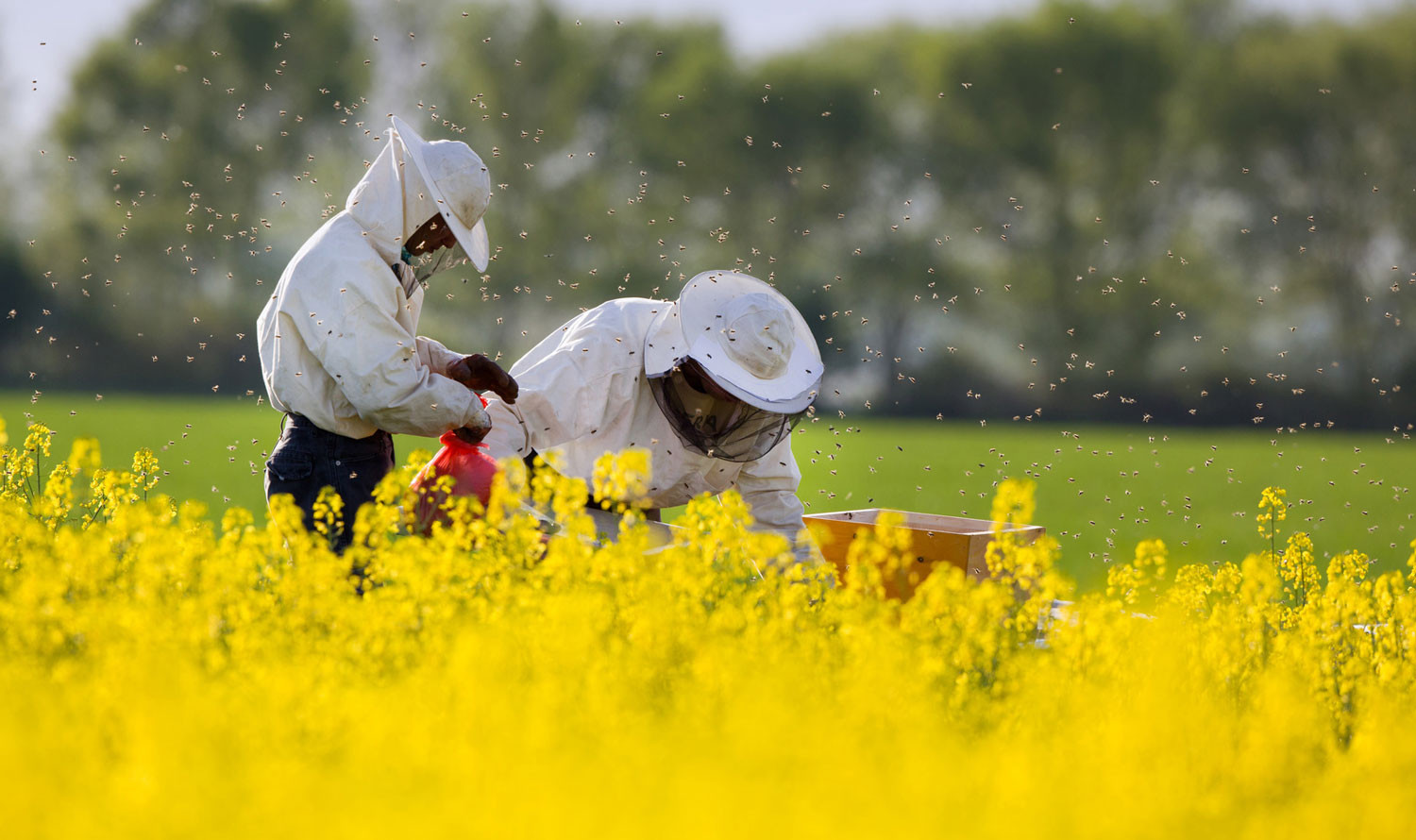


The mechanisms of natural swarming

Based on the videoconference by Prof. Joseph Hemmerlé on 11.01.2025, School of Agriculture Châteauneuf / Sion
Swarming is a natural phenomenon at the core of honey bee colony dynamics. Through this process, part of the colony, led by the old queen, leaves the hive to establish a new nest. For beekeepers, swarming represents a challenge, but it also constitutes an opportunity for colony renewal. Thanks to the in-depth research and careful observations conducted by Professor Joseph Hemmerlé, it is possible to gain a better understanding of the biological, ethological, and environmental mechanisms underlying this fascinating behaviour.
1. Introduction
Bees of the genus Apis live in highly organised societies that meet the principal criteria of eusociality:
- a division of labour, notably between reproductive individuals and workers;
- cooperation in brood rearing;
- the overlap of several generations within a single colony.
To this is added the construction of a durable nest, which serves simultaneously as a site for reproduction, storage of food reserves and regulation of the microclimate.
Social life provides considerable advantages: collective defence, division of labour, coordinated exploitation of resources, thermoregulation and continuity of the colony beyond the lifespan of individual bees. It also entails costs: high density and frequent contacts can facilitate the transmission of parasites and infectious agents.
Selection and beekeeping practices have modified certain traits of honey bee populations, including gentleness, productivity and the propensity to swarm. Beekeeping has not, however, abolished their natural mode of colony reproduction. A colony housed in a hive remains biologically capable of dividing and founding a new colony without human intervention.
This is precisely what swarming represents: not “disobedience” by the colony, but its natural reproduction by division.
2. Swarming: a process, not an event
Swarming is not reducible to the spectacular sight of a mass of bees suddenly leaving the hive. In Apis mellifera, it is a form of colony reproduction by division. One social unit thereby produces at least one second unit capable of becoming autonomous.
This transformation begins before the visible departure of the swarm. Demography, use of space, queen rearing, the behaviour and physiology of part of the worker population, and the physiology of the old queen all change progressively. There is, however, neither a universal trigger nor a fixed timetable according to which every colony passes through exactly the same sequence of stages within the same period.
When the prime swarm departs, the mated old queen leaves with a large fraction of the adult workers. The combs, brood and most of the food stores remain in the mother colony. In colonies quantified by Rangel and Seeley (2012), about three quarters of the adult workers departed with the prime swarm on average, although there was variation among colonies. This value is therefore not a fixed proportion applicable to every swarm.
The swarm thus leaves with a large workforce but virtually no infrastructure. It must find a nest site, build new comb, resume egg laying quickly and establish new food reserves. The mother colony, in contrast, retains its nest, brood and provisions but loses its mated queen and a large part of its adult population.
Swarming also changes the dynamics of Varroa destructor. Phoretic mites are divided between the resulting units, the prime swarm begins without brood, and the mother colony generally experiences a later brood interruption associated with queen replacement. These periods temporarily reduce opportunities for mite reproduction, but they do not eliminate the infestation (DeGrandi-Hoffman et al., 2017). In densely stocked apiaries, drifting and robbing can subsequently introduce mites again and reduce or even erase part of this initial advantage (Seeley & Smith, 2015). Swarming therefore changes Varroa dynamics; it does not reset infestation to zero.
In the days before departure, queen rearing becomes one of the most visible signs of preparation. Swarm cells are produced, but their presence alone does not represent an irreversible point. Queen rearing may be initiated and later abandoned, and cells already under development may be destroyed by the workers (Allen, 1965; Caron, 1981). A queen cell therefore indicates a stage of the process, not by itself an irreversible decision.
The workers also change during swarm preparation. Physiological studies show changes in the juvenile hormone–vitellogenin system in workers from colonies preparing to swarm. Zeng et al. (2005) found no simple early rise in juvenile hormone that announced swarming; clearer changes appeared mainly after queen rearing had begun. More recently, Klett et al. (2025) observed higher vitellogenin expression in certain 10- to 14-day-old workers shortly before swarming. These findings are compatible with delayed behavioural maturation in part of the worker population, but they demonstrate neither a single hormonal trigger nor a rule that determines exactly which bees will later leave with the swarm.
At the same time, the old queen undergoes genuine preparation for flight. Her body mass declines during swarm preparation, in temporal association with the rearing of future queens (Morse et al., 1966). Workers also alter their interactions with her, including feeding and mechanical signalling, thereby influencing her reproductive activity and behaviour (Pierce et al., 2007). The queen is therefore not simply a passive female “put on a diet” before departure: her physiology is reorganised within the collective process of swarm preparation.

The workers that will take part in the swarm also carry an important transportable reserve: before departure they fill their honey crops with honey (Combs, 1972). This consists mainly of carbohydrates carried in the crop rather than a general increase in internal energy reserves: Leta et al. (1996) found no parallel increase in body glycogen or haemolymph sugars. This load is therefore a collectively transportable reserve for flight, the transitional phase and the rapid construction of the first combs.
As departure approaches, distinctive collective behaviours also appear. Worker piping and buzz-runs help activate the workers, prepare their flight muscles and synchronise collective take-off (Rangel et al., 2010; Rittschof & Seeley, 2008). These activation signals should not be confused with the signals produced by young queens described below.

3. Why does a colony enter swarm preparation?
It is tempting to search for a single trigger. The available evidence does not support one. Swarming instead emerges from the joint development of several dimensions of the colony: adult population, bee density, brood demography, use of space, resources, signals from the queen and young brood, worker sensitivity to these signals, season, genotype and the colony’s overall reproductive state.
Among these factors, the density of adult bees is one of the best supported experimentally. Classic experiments showed that restricting the space actually available to adult workers could favour queen rearing and swarming. Restricting only the area in which the queen could lay did not produce the same effect (Simpson & Riedel, 1963; Simpson & Greenwood, 1975).
This distinction does not mean that “space does not matter”. Rather, it shows that the beekeeping concept of “lack of space” covers several biologically different situations. A colony may lack effectively usable space for adult bees, immediately available cells, storage space or comb-building area. A growing colony progressively outgrowing its available housing is also biologically different from artificially restricting only the laying area.
In practice, brood-nest congestion is particularly important. It is not a single variable but a composite state that may combine a large adult population, extensive areas of capped brood close to emergence, relatively little young brood, fewer immediately available cells, nectar or pollen stored within the brood nest and changes in spatial organisation. Marked brood-nest congestion is therefore a useful warning sign, but not proof that a swarm will depart. No longitudinal study has yet quantified the sensitivity, specificity or independent predictive value of brood-nest congestion defined in a standardised way.
The traditional explanation based on “dilution of queen pheromone” must also be qualified. The queen does not simply fill the hive with a homogeneous cloud of pheromone whose concentration automatically declines as the population grows. An important part of her fertility signal is relayed by workers that contact the queen and distribute the information through social networks (Richardson et al., 2024). The spatial and social structure of these networks can therefore influence signal transmission.
Queen mandibular pheromone is also only one part of this information system. Experiments show that it can inhibit queen rearing, but that its effect decreases with time when acting alone (Pettis et al., 1995). Combining queen-derived information with the presence of eggs or very young larvae suppresses queen rearing more strongly, indicating that reproductive information within the colony comes from several sources (Pettis et al., 1997).
Finally, workers are not merely passive recipients. Their response to queen mandibular pheromone varies, among other factors, with genotype and season (Pankiw et al., 1994). Colony state therefore depends not only on how much signal is present, but also on how it is distributed and how sensitive the receiving workers are to it.
External conditions modulate this system without necessarily creating it. In temperate regions, the main swarming season typically coincides with rapid spring colony growth. Weather mainly influences the timing of departure in colonies that are already prepared. An analysis of 1,335 swarming events in Germany showed that departures were rare on rainy days and fell sharply during cold periods (Henneken et al., 2012). Colonies already ready to swarm may therefore wait for a suitable flight window.

4. Departure: the division becomes visible
When the prime swarm leaves the hive, colony division finally becomes spectacular. The mated old queen accompanies a large proportion of the adult workers. The collective departure is not, however, commanded by the queen: she is indispensable to reproduction of the new unit, but she determines neither the exact time of departure on her own nor the future nest site.
The swarm frequently settles on a support close to the original nest and forms a temporary cluster. This is not simply a passive mass of bees. It must hold several thousand bees and the queen together, support its own weight, allow scouts to depart and return, and at the same time serve as a platform for information exchange.
The structure of the cluster is mechanically adaptable. Peleg et al. (2018) demonstrated experimentally that a cluster exposed to horizontal shaking changes its geometry in ways that increase stability. Three-dimensional reconstructions have also shown that mass is not distributed uniformly and that internal organisation limits the load borne by individual layers of bees (Shishkov et al., 2022). The swarm cluster therefore functions as a dynamic collective structure.
The search for a new nest site does not necessarily begin only during this stop. In some colonies, scout bees begin exploring potential sites before the prime swarm even departs (Rangel et al., 2010). The cluster is therefore an intermediate stage in nest-site search, not necessarily its starting point.
A minority of workers then assumes a decisive role: the scout bees explore potential cavities, assess them and recruit additional scouts to options they consider favourable.
A cavity is not evaluated according to a single characteristic. Classic experiments found preferences for certain properties, including an intermediate volume of around 40 litres, a relatively small entrance, an entrance located towards the lower part of the cavity and a relatively elevated position (Seeley & Morse, 1978). These findings do not define a universal “ideal hive”: landscape, available cavities, populations and local conditions determine which choices are actually possible.
Scouts physically inspect cavities. Seeley (1977) showed that they walk over a large part of the internal surfaces during repeated inspections, contributing among other things to the assessment of volume. The colony therefore has no complete map of all potential nest sites in the landscape; it chooses among those that its scouts have actually discovered and examined.
Finally, attractiveness and nest-site quality must be distinguished. Certain odours, particularly the Nasonov gland signal or the odour of old brood comb, can attract scout bees and increase the probability that a cavity will be discovered (Schmidt, 2001). This does not necessarily mean that a cavity found more easily in this way is biologically superior.


5. Collective decision-making: from several options to one destination
The scouts make up only a minority of the swarm, but they perform most of the search, assessment and comparison of nest sites. The great majority of the bees never personally visit the candidate cavities. Collective decision-making is therefore not a “vote” in which every worker participates.
When a scout discovers a promising cavity, she returns to the cluster and performs a waggle dance. The dance indicates the direction and distance of the site, but in this context its central function is to recruit additional scout bees. The recruits then inspect the cavity themselves and may in turn promote it.
This creates positive feedback: a well-rated site recruits more bees, which perform further evaluations and can increase its support still further. Less attractive options gradually lose support, partly because scouts stop dancing for their site after a certain number of visits (Grozinger et al., 2014).
This passive decline is complemented by active inhibition. Scouts use a stop signal, a brief mechano-acoustic signal that can interrupt the dance of a bee supporting a competing option (Schlegel et al., 2012). The stop signal should not be confused with worker piping: the former inhibits recruitment, whereas the latter acts later in activating the group before flight.
The final decision rests neither on unanimity nor simply on a majority of the entire swarm cluster. It depends on a quorum: once a sufficient number of scout bees is physically present at the same site, the system progressively shifts from comparing options towards preparing for departure.
A quorum therefore means that one option has acquired sufficient operational support among the sites that were actually discovered. It does not mean that all scouts agree or that the colony has found the best nest site existing in the landscape.
Once the choice is sufficiently stabilised, several thousand bees still have to be mobilised for flight. Worker piping and buzz-runs help prepare individuals for collective take-off (Rangel et al., 2010; Rittschof & Seeley, 2008). After departure, informed scouts participate in guiding the swarm towards the selected destination.

6. The mother colony: division may continue
The departure of the prime swarm does not necessarily bring swarming to an end. The mother colony retains the combs, brood and food stores, but has lost its mated old queen and a large proportion of its adult workers. Several young queens may still be present in their queen cells.
The situation is more complex than an automatic succession of fights between queens. A free young queen can produce a characteristic signal known as tooting, while queens still confined in their cells respond with quacking (Michelsen et al., 1986). Workers participate actively in this regulation: they can temporarily retain certain queens in their cells and influence the timing of their emergence (Grooters, 1987).
This system keeps several developmental pathways open. The colony may stabilise around a young queen, which may eventually eliminate her rivals, perform her mating flights and then begin laying. Alternatively, the colony may continue dividing and issue a cast swarm with a generally unmated young queen. In some colonies, a further cast swarm or several successive departures may follow.
Tooting and quacking are therefore primarily associated with regulation of young queens and the possibility of additional cast swarms. They should not be confused with worker piping, which participates in activating workers before flight, nor interpreted as the normal trigger of the prime swarm with the old queen.
Each additional departure removes more workers from the mother colony. Increasing the number of potential colonies therefore comes at the cost of reducing the demographic strength of each unit. The mother colony must ultimately retain enough workers, obtain a successfully mated queen, resume brood rearing and rebuild its population.
The prime swarm faces the opposite problem. It already has a mated queen and many workers, but it must rapidly build comb, resume egg laying and produce a new generation before the original adult population ages too far. A swarm that has departed is therefore not yet successful colony reproduction: biological success is determined by the longer-term fate of all the units created by the division.

7. Colony management: intervene according to the stage
For the beekeeper, swarming can represent a loss of productive strength, but it can also be used for colony multiplication. Swarm prevention and control therefore act on a natural biological process rather than suppressing abnormal behaviour.
The biology leads to a distinction between three different objectives that are often grouped together under the general heading of “swarm prevention”.
Prevent the establishment of stable swarm preparation. As long as queen rearing has not become durably established, the objective is to accompany colony growth and avoid a combination of severe congestion, brood demography, resource flow and queen state that favours the transition towards reproduction.
Modify swarm preparation that is already under way. When larvae are already being actively fed in swarm cells, the colony is investing in division. Destroying those cells prevents those queens from developing, but does not demonstrate that the colony’s reproductive state has disappeared. A broader intervention may seek to alter the adult population, the next emergence wave, brood distribution, functional space, resource flows or continuity of egg laying.
Control loss without eliminating the swarming state. Some very late measures mainly prevent loss of the queen or swarm. Clipping one of the queen’s wings is an example: if the queen cannot follow the swarm in flight, the swarm may return even though the biological swarm preparation persists (Simpson, 1963). Preventing the loss of a swarm is therefore not the same as preventing swarming.
Brood-nest congestion deserves particular attention in this context. Reinterpreting it as a composite state does not reduce its practical value; it makes that value more precise. In a very strong colony that has not recently undergone a major manipulation, marked brood-nest congestion justifies increased vigilance and a broader assessment: bee density, open and capped brood, the next emergence wave, queen cells, queen activity, nectar storage, genuinely usable comb space and changes since the previous inspection.
Very different methods may affect partly overlapping components of colony state. Making a nucleus can reduce the current adult population and the next emergence wave; a Demaree manipulation or brood redistribution alters spatial and demographic organisation; VIRDIS acts, among other things, on the arrangement of colony and brood; queen caging temporarily interrupts egg laying. This mechanistic plausibility does not mean that all these methods act through one demonstrated common mechanism or have equal effectiveness.
Direct experimental support is very uneven. Preventive use of young queens has been tested directly and reduced swarm preparation or swarming under the conditions studied (Forster, 1969). Some manipulations of space and population have also been tested experimentally. For many classic methods, however, effect size, durability and the optimal stage of intervention remain insufficiently quantified.
This limitation does not mean that practical experience is without value. It means that three levels should be distinguished: what has been demonstrated directly, what is biologically plausible, and what is supported mainly by repeated beekeeping experience.
Technical monitoring systems also offer interesting prospects. Ramsey et al. (2020) showed that vibrational spectra from a colony can contain signatures associated with approaching swarming. These results are promising, but they do not mean that departure of an individual colony can now be predicted reliably and generally. Direct observation and interpretation of several converging signs therefore remain indispensable.
Reminder:


8. Understanding swarming in order to manage colonies better
Swarming illustrates remarkably well how a honey bee colony functions as a collective biological system. It arises neither from an order issued by the queen, nor from a single signal, nor from simple lack of space. Instead, it emerges from a progressive transformation of demography, space, resources, physiology and social networks until one colony divides into several potential reproductive units.
For the beekeeper, this understanding changes the central question. It is no longer enough simply to ask whether queen cells are present; the aim is to determine where the colony stands within the process, which other signs converge and which components an intervention is actually likely to modify.
A queen cell is therefore not the whole swarming state. Brood-nest congestion is not a switch. A young queen reduces a probability but does not make swarming impossible. A method that prevents the loss of a swarm has not necessarily prevented swarming biologically. These distinctions make it possible to connect science and practice more accurately.
The experience accumulated by generations of beekeepers remains valuable, particularly because many management techniques were developed long before they were studied experimentally. Research now allows some mechanisms to be understood more clearly, others to be qualified, and above all solidly demonstrated findings to be distinguished from biologically plausible interpretations and practices supported mainly by experience.
Swarming thus becomes less a mysterious event that must simply be stopped and more a biological process that can be read, anticipated and, depending on the beekeeper’s objectives, prevented, accompanied, controlled or used for colony multiplication.
See also:
- Swarming: recognising the stage and acting at the right moment
- Swarming in practice: preventing, controlling and making use of it
- Queen cells
- Bee dance
- Pheromones: true semiochemical communication
References
- Allen, M. D. (1965). The production of queen cups and queen cells in relation to the general development of honeybee colonies, and its connection with swarming and supersedure. Journal of Apicultural Research, 4, 121–141. https://doi.org/10.1080/00218839.1965.11100115
- Caron, D. M. (1981). Congestion, seasonal cycle and queen rearing as they relate to swarming in Apis mellifera L. Annals of the Entomological Society of America, 74(1), 134–137. https://doi.org/10.1093/aesa/74.1.134
- Combs, G. F. (1972). The engorgement of swarming worker honeybees. Journal of Apicultural Research, 11, 121–128. https://doi.org/10.1080/00218839.1972.11099711
- DeGrandi-Hoffman, G., Ahumada, F., & Graham, H. (2017). Are dispersal mechanisms changing the host–parasite relationship and increasing the virulence of Varroa destructor (Mesostigmata: Varroidae) in managed honey bee (Hymenoptera: Apidae) colonies? Environmental Entomology, 46, 737–746. https://doi.org/10.1093/ee/nvx077
- Forster, I. W. (1969). Swarm control in honey bee colonies. New Zealand Journal of Agricultural Research, 12, 605–610. https://doi.org/10.1080/00288233.1969.10421245
- Grooters, H. J. (1987). Influences of queen piping and worker behaviour on the timing of emergence of honey bee queens. Insectes Sociaux, 34, 181–193. https://doi.org/10.1007/BF02224083
- Grozinger, C. M., Richards, J., & Mattila, H. R. (2014). From molecules to societies: Mechanisms regulating swarming behavior in honey bees (Apis spp.). Apidologie, 45(3), 327–346. https://doi.org/10.1007/s13592-013-0253-2
- Henneken, R., Helm, S., & Menzel, A. (2012). Meteorological influences on swarm emergence in honey bees (Hymenoptera: Apidae) as detected by crowdsourcing. Environmental Entomology, 41(6), 1462–1465. https://doi.org/10.1603/EN12139
- Klett, K., Ihle, K. E., Simone-Finstrom, M., & Spivak, M. (2025). Vitellogenin plays a role in regulating honey bee swarming. Scientific Reports, 15, 36569. https://doi.org/10.1038/s41598-025-20547-z
- Leta, M. A., Gilbert, C., & Morse, R. A. (1996). Levels of hemolymph sugars and body glycogen of honeybees from colonies preparing to swarm. Journal of Insect Physiology, 42, 239–245. https://doi.org/10.1016/0022-1910(95)00106-9
- Michelsen, A., Kirchner, W. H., Andersen, B. B., & Lindauer, M. (1986). The tooting and quacking vibration signals of honeybee queens: A quantitative analysis. Journal of Comparative Physiology A, 158, 605–611. https://doi.org/10.1007/BF00603817
- Morse, R. A., Dyce, E. J., & Young, R. G. (1966). Weight changes by the queen honey bee during swarming. Annals of the Entomological Society of America, 59(4), 772–774. https://doi.org/10.1093/aesa/59.4.772
- Pankiw, T., Winston, M. L., & Slessor, K. N. (1994). Variation in worker response to honey bee (Apis mellifera L.) queen mandibular pheromone. Journal of Insect Behavior, 7(1), 1–15. https://doi.org/10.1007/BF01989823
- Peleg, O., Peters, J. M., Salcedo, M. K., & Mahadevan, L. (2018). Collective mechanical adaptation of honeybee swarms. Nature Physics, 14, 1193–1198. https://doi.org/10.1038/s41567-018-0262-1
- Pettis, J. S., Winston, M. L., & Collins, A. M. (1995). Suppression of queen rearing in European and Africanized honey bees Apis mellifera L. by synthetic queen mandibular gland pheromone. Insectes Sociaux, 42(2), 113–121. https://doi.org/10.1007/BF01242447
- Pettis, J. S., Higo, H. A., Pankiw, T., & Winston, M. L. (1997). Queen rearing suppression in the honey bee: Evidence for a fecundity signal. Insectes Sociaux, 44(4), 311–322. https://doi.org/10.1007/s000400050053
- Pierce, A. L., Lewis, L. A., & Schneider, S. S. (2007). The use of the vibration signal and worker piping to influence queen behavior during swarming in honey bees, Apis mellifera. Ethology, 113, 267–275. https://doi.org/10.1111/j.1439-0310.2006.01314.x
- Ramsey, M.-T., Bencsik, M., Newton, M. I., Reyes, M., Pioz, M., Crauser, D., Simon-Delso, N., & Le Conte, Y. (2020). The prediction of swarming in honeybee colonies using vibrational spectra. Scientific Reports, 10, 9798. https://doi.org/10.1038/s41598-020-66115-5
- Rangel, J., Griffin, S. R., & Seeley, T. D. (2010). An oligarchy of nest-site scouts triggers a honeybee swarm's departure from the hive. Behavioral Ecology and Sociobiology, 64(6), 979–987. https://doi.org/10.1007/s00265-010-0913-4
- Rangel, J., & Seeley, T. D. (2012). Colony fissioning in honey bees: Size and significance of the swarm fraction. Insectes Sociaux, 59(4), 453–462. https://doi.org/10.1007/s00040-012-0239-5
- Richardson, T. O., Kay, T., Keller, L., & Stroeymeyt, N. (2024). Pheromone relay networks in the honeybee: Messenger workers distribute the queen's fertility signal throughout the hive. BMC Biology, 22, 288. https://doi.org/10.1186/s12915-024-02083-w
- Rittschof, C. C., & Seeley, T. D. (2008). The buzz-run: How honeybees signal 'Time to go!'. Animal Behaviour, 75(1), 189–197. https://doi.org/10.1016/j.anbehav.2007.04.026
- Schlegel, T., Visscher, P. K., & Seeley, T. D. (2012). Beeping and piping: Characterization of two mechano-acoustic signals used by honey bees in swarming. Naturwissenschaften, 99, 1067–1071. https://doi.org/10.1007/s00114-012-0990-5
- Schmidt, J. O. (2001). Hierarchy of attractants for honey bee swarms. Journal of Insect Behavior, 14, 469–477. https://doi.org/10.1023/A:1011120021964
- Seeley, T. D. (1977). Measurement of nest cavity volume by the honey bee (Apis mellifera). Behavioral Ecology and Sociobiology, 2, 201–227. https://doi.org/10.1007/BF00361902
- Seeley, T. D., & Morse, R. A. (1978). Nest site selection by the honey bee, Apis mellifera. Insectes Sociaux, 25, 323–337. https://doi.org/10.1007/BF02224297
- Seeley, T. D., & Smith, M. L. (2015). Crowding honeybee colonies in apiaries can increase their vulnerability to the deadly ectoparasite Varroa destructor. Apidologie, 46(6), 716–727. https://doi.org/10.1007/s13592-015-0361-2
- Shishkov, O., Chen, C., Madonna, C. A., Jayaram, K., & Peleg, O. (2022). Strength-mass scaling law governs mass distribution inside honey bee swarms. Scientific Reports, 12, 17388. https://doi.org/10.1038/s41598-022-21347-5
- Simpson, J. (1963). Queen perception by honey bee swarms. Nature, 199, 94–95. https://doi.org/10.1038/199094a0
- Simpson, J., & Greenwood, S. P. (1975). Results of restricting the brood space of honeybee colonies. Journal of Apicultural Research, 14(1), 51–55. https://doi.org/10.1080/00218839.1975.11099801
- Simpson, J., & Riedel, I. B. M. (1963). The factor that causes swarming by honeybee colonies in small hives. Journal of Apicultural Research, 2(1), 50–54. https://doi.org/10.1080/00218839.1963.11100056
- Zeng, Z., Huang, Z. H., Qin, Y., & Pang, H. (2005). Hemolymph juvenile hormone titers in worker honey bees under normal and preswarming conditions. Journal of Economic Entomology, 98(2), 274–278. https://doi.org/10.1093/jee/98.2.274