

Platform for Professional Beekeeping Knowledge and Practice
357 articles


► Read for you
A colony may replace its queen for several reasons: advanced age, insufficient egg-laying, poor fertilization, injury, or general weakness. But a recent study suggests that another factor may sometimes be at play: a severe viral infection in the queen could impair her reproductive function and alter her pheromonal signal, to the point of triggering supersedure.

Cantharis fusca | Flug | Garten | Gemeiner Weichkäfer | Insektensterben | Käfer | artensterben | bestäuben | bestäubung | blütenpflanzen | gifte | glyphosat | gärten | pestizide | roundup | steingärten | tot | umweltverschmutzung | wahnsinn | wildbienen
© Lothar Lenz
Pollinators are much more than honey bees. This article provides a scientifically grounded and practical overview of their diversity, their role in ecosystems and agriculture, the main pressures they face, and concrete measures to support them.

Planning the beekeeping season makes it possible to prepare optimally for upcoming activities with our bees. Thanks to the operating concept developed by apiservice, this is easy to implement for all beekeepers. It is an indispensable tool for effective apiary management. The operating concept can be personalised and allows for a clear visualisation of beekeeping activities and the planning of the appropriate work.

Numerous articles available on the internet provide valuable advice on how to manage our bee colonies. It can sometimes be useful to return to more basic notions, grounded in common sense. The “ten mistakes to avoid” are intended as a way to spark the curiosity of beginner beekeepers or to encourage reflection among more experienced colleagues.
Fortunately, there are not only ten mistakes to avoid… otherwise beekeeping would be tedious or even wearisome!

The introduction of queens always entails a significant risk for the introduced queen. Some publications report failure rates of up to 50 %. For successful acceptance, all conditions must be optimal. The highest success rates are achieved when a young colony with a young queen is combined with an older colony. In general, favourable conditions must be deliberately created in order for a colony to accept an introduced queen.

© TOMASZ KLEJDYSZ
► Read for you
RNA interference offers a new approach to varroa control: instead of killing the mite directly, it aims to block the expression of an essential parasite gene. This article summarizes what is currently known about vadescana/Norroa, early laboratory and field trials, and the remaining questions for honey bees, non-target organisms, and beekeeping in Switzerland.

► Read for you
Pesticides do not necessarily remain where they are applied: residues can travel through air, dust, water, pollen, bee bread and wax into the hive environment. This article puts two recent analyses on exposure, regulation and bee health into context, with a particular focus on what the Swiss data suggest.

There are several circumstances in which this beekeeping operation is required; however, the most serious case, which calls for the greatest precautions, is American foulbrood. The content of this information sheet therefore focuses on this specific disease.

► Read for you
Queen ringing is presented as an emerging method to temporarily interrupt egg laying without confining the queen. This summary examines what the first studies actually show, what remains uncertain, and what Swiss beekeepers can — or cannot yet — cautiously take from it for Varroa control.

► Read for you
Wax combs age together with the colony: they darken, accumulate cocoons, lose cell volume and may store residues. This article summarises what recent studies show about the effects of old combs on brood, bees and the quality of bee products, and draws practical recommendations for the apiary.

agriculture | apiarist | apiary | apiculture | apiculturist | bee | beehive | beekeeper | beekeeping | box | farm | farming | food | garden | hive | holding | honey | honey bee | honeycomb | keeper | keeping | man | natural | nature | nectar | outdoor | p
© Mjucha
► Read for you
Crowded hives are not only a matter of apiary layout: they may also increase drifting and the spread of varroa between colonies. The study by Seeley and Smith shows how spacing, robbing and reinvasion can influence overwintering success. For beekeepers, the practical message is clear: good apiary organisation can reduce risk, but it never replaces rigorous varroa monitoring and control.

What qualities are required to be a good beekeeper? They are numerous, as beekeeping draws on a wide range of techniques and fields. Some are present from the outset, while others are acquired over time.

Although the wax moth has a very bad reputation, beekeeping manuals often underestimate the damage caused by the larvae of the greater wax moth Galleria mellonella and the lesser wax moth Achroea grisella, which consume everything that comes within reach of their mandibles (wax, food reserves, pollen stores, wood, polystyrene—not to mention the brood!). It is commonly assumed that strong colonies can defend themselves very easily against wax moths … but this is not always the case. In fact, wax moths reproduce very rapidly, and the larvae of the greater wax moth feed on capped brood, sheltered from counter-attacks by worker bees. As a result, the bee population may decline, as may the colony’s defences against this formidable pest. Selection for overly gentle bees and the pheromonal mimicry of the wax moth, which imitates queen pheromones, can ultimately lead to colony collapse.
Despite these harmful effects, it should be emphasised that wax moths fulfil an important hygienic function, especially in the context of “poor” beekeeping practices. They destroy abandoned bee nests and return the recovered materials to the natural cycle. In this way, pathogens responsible for diseases such as American foulbrood and European foulbrood are also eliminated.

agriculture | apiary | bee | beehive | beeswax | biology | cell | colony | hexagon | honey | honeycomb | nature | pollen | sweet | wax | yellow | animals | apiculture | backgrounds | breeding | brood | brown | combing | construction | effort | environment
► Read for you
What happens inside a capped brood cell as a larva becomes an adult bee? This article explains honey bee metamorphosis and shows why this seemingly quiet stage is, biologically, one of intense transformation.

It may happen, for example during the first spring inspection, that one encounters a moribund colony with no food reserves, with frames showing scattered brood of the male type … What has happened?
Figure 1: Drone-laying colony: very small population, scattered drone brood, no worker brood, low food reserves, no visible queen, deformed combs, drone cells.

The articles proposed by experienced beekeepers for the training of younger colleagues remind us that colonies should be carefully insulated for overwintering.
However, a recent German study reports that there is no advantage, in terms of brood initiation or colony development in spring, associated with sophisticated insulation of the colony. The dogma of insulating the winter cluster is thus being challenged. By discovering the precision of the winter cluster’s thermoregulation, the inquisitive beekeeper is prompted to reflect on their beekeeping practices.

justice | law | order | themis | statue | legal | trial | judge | weight | symbol | sign | just | equality | balance | sculpture | judgement | goddess | decision | court | woman | weigh | measure | scales | verdict | tribunal | blind | equilibrium | judic
© www.photocreo.com
What is the legal status of beekeepers in Switzerland? When does a beehive become a structure requiring a permit? This article summarizes the legal opinion drafted in 2023 by Prof. Thierry Largey (University of Lausanne), whose conclusions shed light on beekeeping practices without, however, replacing a legal analysis of a specific case.

The article explains how the colony's internal biological mechanisms provide a better understanding of seasonal variations in development, the importance of harvests during favorable honey flows, the transition from summer bees to winter bees, and certain phenomena of decline.
The scientific work presented highlights the central role of vitellogenin, brood pheromones, and protein nutrition in the social organization, survival, and ability of bees to adapt to their environment.
Translated with DeepL.com (free version)

Every May 20, World Bee Day returns to the calendar. Behind this date lies a broader question: Why have we dedicated a day to pollinators? What is its specific purpose, and what does science tell us about the actual status of these species? The following provides some context based on the available evidence (See the official website: World Bee Day).

There is no single correct beekeeping practice. However, there are rules based on common sense and on the experience of seasoned or professional beekeepers. While the queen is indeed the driving force of the colony, hive cleanliness, control of varroa mites, swarm-prevention strategies, the location of the apiary, and winter preparation are equally important for the healthy development of the colony with a view to achieving a good honey harvest.

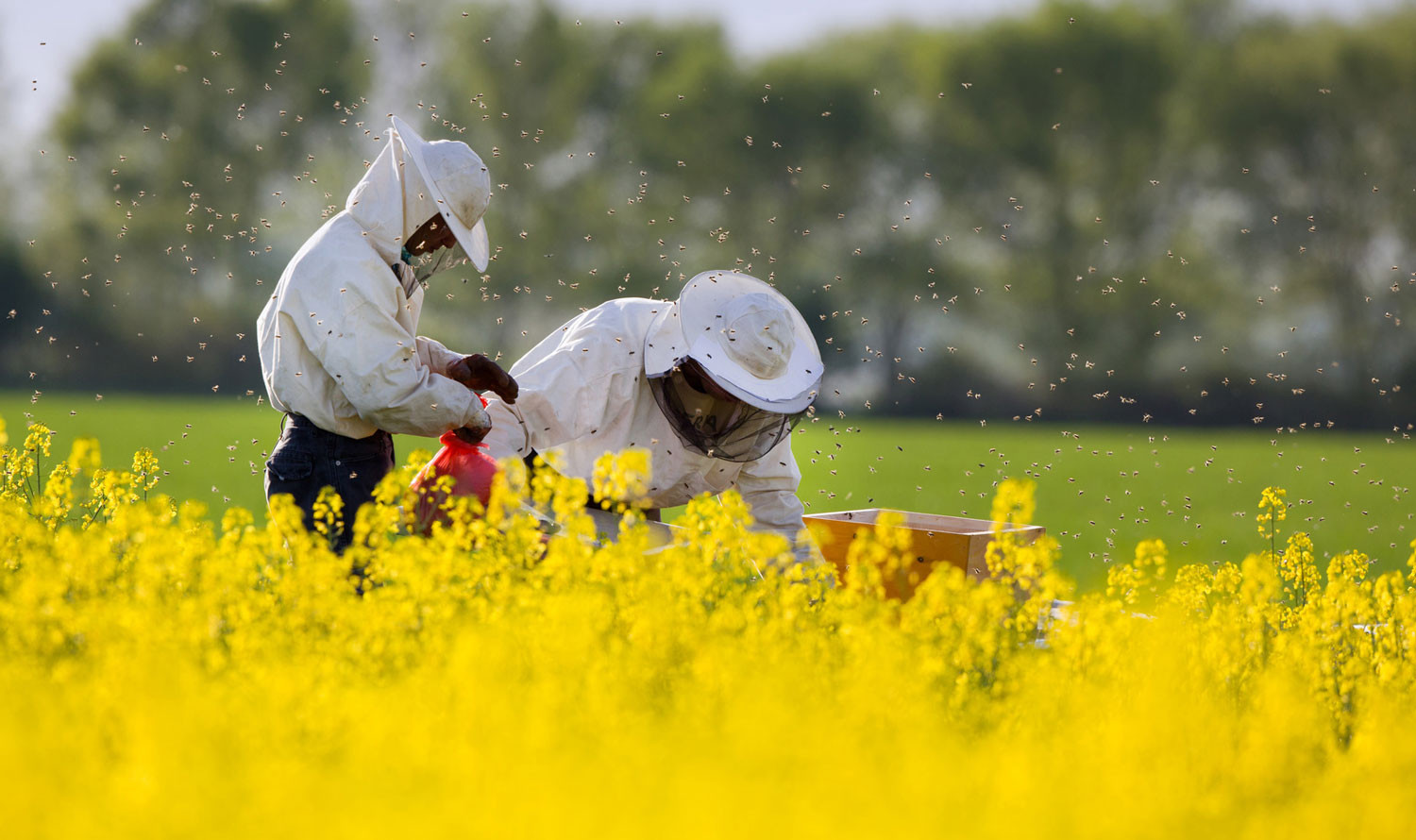
A hive inspection should be prepared in advance to avoid omissions and to improve efficiency. Any inspection, even a brief one, disturbs the colony, which perceives it as an intrusion; the resulting stress causes the bees to consume between 0.5 and 1 kg of honey. Inspections should therefore only be carried out when necessary. The following tips make inspections more effective: