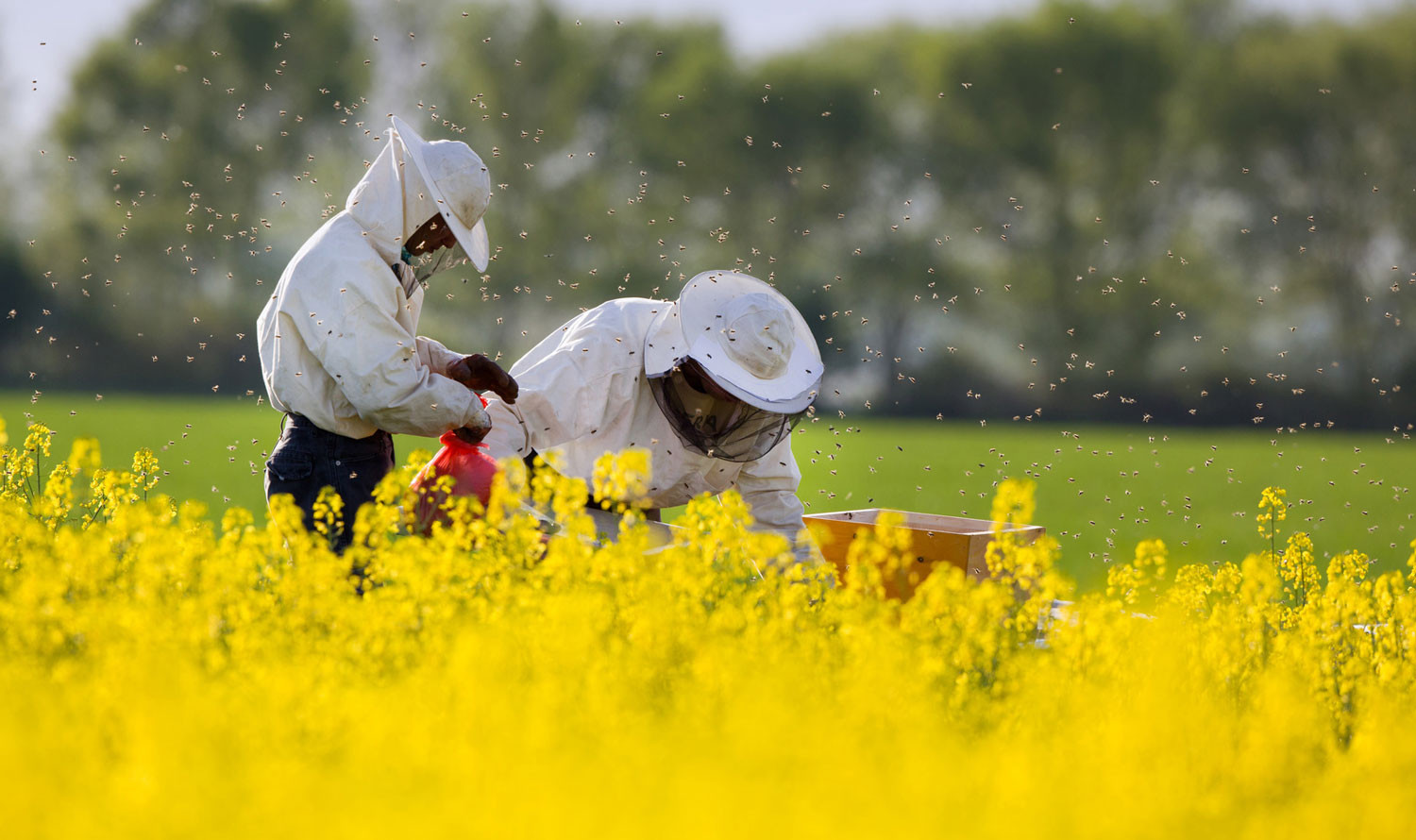


November at the apiary

In November, the apiary gradually enters its winter dormancy, but not all colonies are necessarily brood-free yet. The key is to observe without disturbing the bees, secure the hives, and check the food stores. The decision to treat for varroa mites in winter is not based on a fixed date, but rather when the absence of capped brood is confirmed.
1. Priorities of the month
- Observe the colonies without disturbing them and reserve openings for a specific question.
- Secure the hives against rodents, water, wind and the first snowfalls.
- Verify that capped brood is genuinely absent before the winter varroa treatment.
- Track hive weights without automatically feeding syrup.
- On mild days, remain alert to robbing and to the Asian hornet.
2. November at the apiary: the guiding idea of the month
 |
Objective |
In November, activity decreases markedly in many apiaries, but the calendar is not sufficient to describe the state of the colonies. Depending on altitude, exposure, weather and the dynamics particular to each colony, brood may still be present.
The guiding idea of the month is therefore to avoid unnecessary handling, to observe more and to open a hive only when an important decision depends on it. November may mark the beginning of the window for the winter varroa treatment, but this treatment must not be triggered simply because a date has been reached.
Winter preparation should be completed before the first sustained cold arrives. In November, the task is above all to check that the measures taken remain appropriate to the real conditions of the apiary.
The reference points proposed here correspond to a temperate central European climate. They must be adapted to the altitude, to the weather of the particular year and to the actual condition of each colony.
Further reading
- Development and dynamics of bees and varroa over the course of the year
- Successful overwintering
- Winter bees: why the summer decides the spring
3. Priority tasks of the month
3.1 Observing without disturbing
 |
Objective |
What to look at
Compare the colonies with one another: activity on a mild day, a clear entrance, mortality in front of the hive, unusual agitation, fighting, bees crawling or unable to fly. On the debris tray, observe the position and width of the debris strips, the cappings, bee remains and any traces of rodents.
Practical steps
Make a brief, quiet round of the apiary. Gently clear an entrance obstructed by leaves, grass, snow or dead bees. Use a clean tray occasionally when reading the debris has to answer a specific question, then record the observations on the colony's record card.
Points to watch
Do not push a tool into the hive to clean the entrance: this could disorganise the cluster and cause unnecessary consumption of stores. External signs guide the assessment but do not on their own prove the absence of brood, the presence of the queen or the sufficiency of the stores.
Further reading
3.2 Securing the overwintering and using insulation judiciously
 |
Objective |
What to look at
The stability of the stands, the fixing of the roofs, resistance to rain, water run-off, branches liable to strike the hives, protection against rodents and the air circulation provided for the type of hive. Also check that the insulating materials remain dry.
Practical steps
Secure the roofs, remove threatening branches, clear the vegetation in front of the entrances and check the mouse guards. Check the water run-off and, where the construction of the hive provides for it, its slight forward tilt.
Dry insulation above the colony can limit certain heat losses. An insulating division board may be appropriate for a nucleus colony, a small but viable colony or an obviously oversized volume, particularly in an apiary that is cold, damp or exposed to prevailing winds and severe weather.
Points to watch
Insulation replaces neither a sufficient population, nor healthy bees, nor accessible food stores. It must not block the intended air circulation, retain water or become damp. The hive volume should normally have been adjusted before the entry into overwintering. In November, combs are neither removed nor moved without a specific reason: a late intervention is justified only in order to forestall an immediate risk to the colony.
Further reading
- Hive insulation put to the test of the bees' collective thermoregulation
- Practical Guide: 4.3 Overwintering
- Sense and nonsense of reducing colonies
4. Colony health / varroa / Asian hornet
 |
Objective |
What to look at
Revisit the history of the summer treatments and of the monitoring already carried out. Take account of the recent weather, of activity at the entrance and of the indications visible on the tray, without automatically inferring that the colony is broodless. A small area of capped brood can still protect part of the varroa population.
Practical steps
Prepare the authorised veterinary medicine, the equipment and the protective gear corresponding to the chosen method. Before treating, verify the absence of capped brood. A brief, targeted opening may be necessary: this is a diagnostic step and not a full inspection.
Treat once the state of the colony and the conditions of application are met, strictly following the current practical guide and the product leaflet. After the treatment, monitor the mite drop for fourteen days. According to the Swiss recommendations, a drop of more than 500 mites justifies a second intervention by spraying or vaporisation; trickling must not be repeated.
Points to watch
Do not treat on a fixed date without checking the brood. Do not improvise dosages or home-made preparations. The winter treatment reduces the varroa population that would relaunch the infestation in spring, but it does not repair the damage already sustained by the winter bees during their development.
Other health signs
Varroa remains the main health issue in November, but certain abnormalities must not be ignored. Extensive traces of dysentery, bees that are crawling or trembling, hairless bees, bees with deformed or poorly unfolded wings, as well as unusual mortality, can signal a health problem without permitting a diagnosis on their own.
During a targeted brood inspection, a patchy brood pattern, sunken or perforated cappings, abnormal larvae or an unusual smell are warning signs. If foulbrood is suspected, do not move bees, combs or equipment, and contact the bee inspector immediately.
Asian hornet
In November, the activity of the Asian hornet does not necessarily cease from one day to the next: in mild weather, individuals may still hunt in front of the hives. A muselière — a protective grid fitted in front of the entrance to reduce pressure from the Asian hornet — can remain useful as long as the bees are flying and local predation is confirmed. After leaf fall, some nests become more visible: observe, photograph or film them, then report the observation at frelonasiatique.ch, without systematic trapping or direct intervention on the nest.
Further reading
- Winter varroa treatment: what to do if colonies are still rearing brood?
- Practical Guide: 2 Diseases and pests
- Practical Guide: 2.7 Asian hornet
5. Food stores and current resources
 |
Objective |
What to look at
The current weight of the hive and above all how it has changed relative to previous checks. Compare hives equipped in a similar way. Take account of prolonged autumn activity, of the possible presence of brood and of the probable distribution of the stores around the cluster.
Practical steps
Always heft or weigh the hives in the same way, so as to follow a trend. Where a critical weight is suspected, confirm the finding before intervening. Where there is a real need, a sound food frame placed within reach of the bees, or fondant directly accessible above the cluster, can constitute an emergency measure, depending on the type of hive and the recommendations in force.
Points to watch
A heavy hive does not necessarily offer stores accessible to the cluster. Conversely, an impression of lightness is not sufficient grounds for opening the hive and moving combs without further verification. In November, liquid syrup is no longer a normal operation for building up stores.
External resources become scarce and irregular. A flying day or a few late incoming loads must not be interpreted as an opportunity to rebuild insufficient stores naturally.
Further reading
6. In the workshop / organisation
 |
Objective |
Clean, disinfect if necessary, repair and store the equipment that is no longer in use. Sort the stored combs, watch for wax moth and discard degraded combs in accordance with the intended wax cycle.
Wash the beesuit, the reusable gloves and the veil. Check the equipment intended for the winter treatment, the protective gear, the condition of the devices and the shelf life of the products.
Complete the colony record cards and the treatment register: dates, products, health observations and decisions taken. This is also a good time to draw up a brief review of the season and to prepare the repairs or purchases that are genuinely necessary.
Further reading
7. What is not done now
 |
Objective |
- A hive is not opened out of curiosity, nor to carry out a full inspection. Every opening must answer a specific question, remain as brief as possible and take place in a weather window compatible with the intended intervention, without rain or strong wind.
- The absence of brood is not inferred from the calendar alone, from a frost, or from the absence of cappings on the tray.
- Routine liquid feeding is not begun in order to compensate belatedly for an uncertain estimate of the stores.
- Colonies are not united, requeened, nor are combs systematically rearranged. Structural corrections that were not made before the winter preparation should no longer be attempted without a specific necessity.
- The hive is not sealed airtight: the insulation must remain dry and respect the air circulation provided for the type of hive.
- The Asian hornet is not trapped systematically, and one never intervenes oneself on a suspected nest: observe, photograph and report.
► The other months...
| January | February | March | April | May | June | July | August | September | October | November | December |