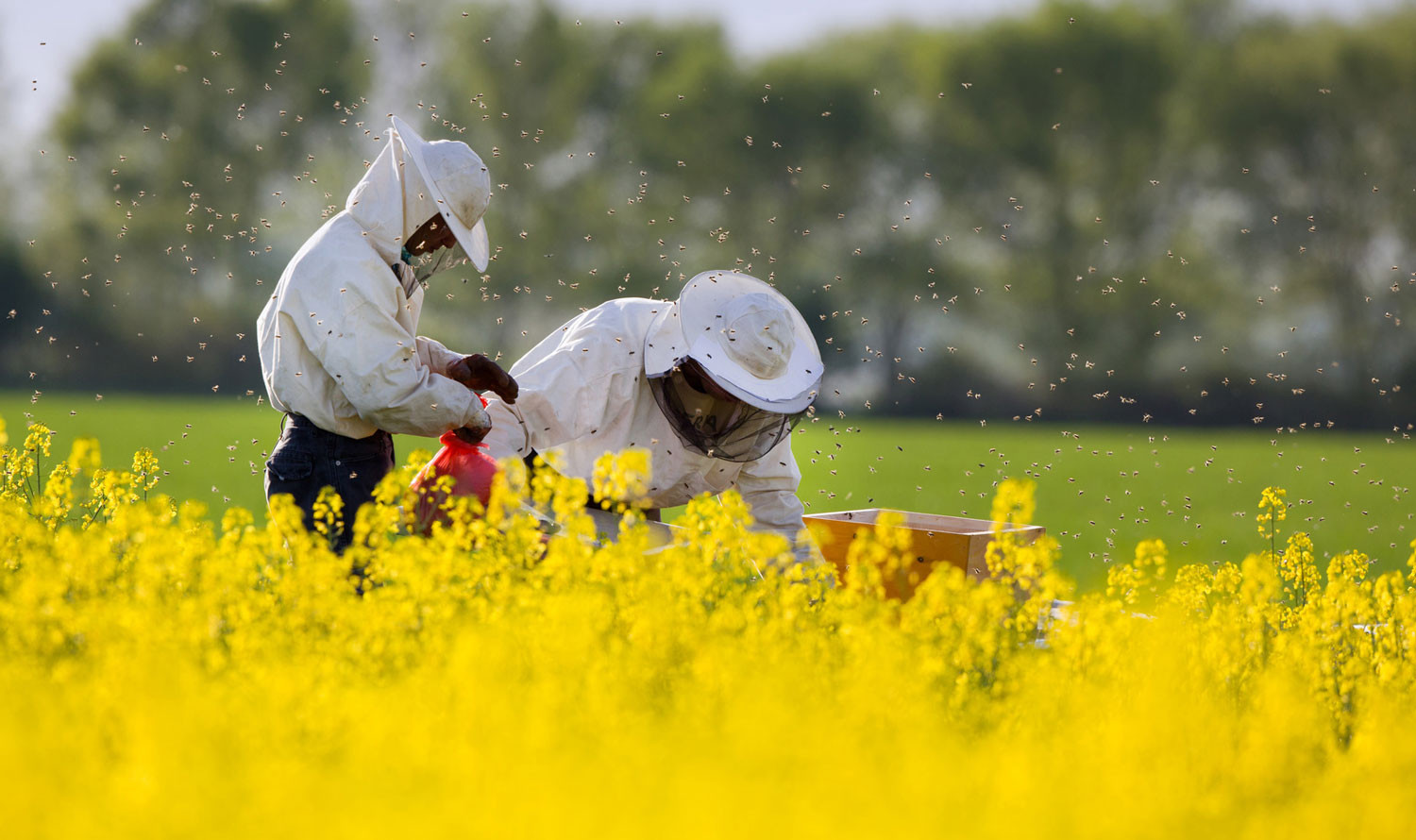


A highly social immunity

Like any living organism, the bee is prey to various parasites and pathogenic germs: every colony contains a broad and diverse range of microbes. Yet not every colony becomes ill as a result! This is because, like all living beings, bees have developed various means over the course of evolution to resist them: this is what is known as immunity. Bees, like humans, possess an immune defence system, but with some differences.
A highly social immunity – individual and collective defenses in honey bees
Like all living organisms, honey bees are exposed to numerous parasites and pathogens. However, the presence of microbes within a colony does not automatically result in disease. Honey bee health relies on an immune system that combines individual defenses with powerful social mechanisms.
At the individual level, bees possess an innate immune system. Immune cells in the hemolymph and defense proteins such as phenoloxidase play a role in melanization, a reaction that helps isolate or neutralize pathogens. This process explains the dark coloration observed in some diseased bees, particularly during viral infections. Compared to other insects, however, honey bees have fewer genes related to individual immunity, and immune responsiveness decreases with age, especially in foraging workers.
This apparent limitation is offset by a highly developed social immunity. The spatial organization of the colony is crucial: young workers that have not left the hive care for the brood and queen in the center, while older, more exposed foragers remain at the periphery. Additional hygienic behaviors include guarding the hive entrance and the rapid removal of dead bees and debris.
Bees also rely on antiseptic substances. Propolis has antibacterial, antiviral and antifungal properties and improves hive hygiene. Honey itself is bacteriostatic due to its high sugar concentration, acidity and the production of hydrogen peroxide. Pollen is preserved through lactic fermentation into bee bread, creating an environment rich in beneficial bacteria that inhibit pathogens.
Other collective defenses include mutual grooming, hygienic behavior involving the detection and removal of diseased brood, and colony-level “fever” responses, where bees raise brood temperature to suppress pathogen development. In extreme cases, bees can kill predators by collectively overheating them.
These immune responses are energetically costly. Effective immunity therefore depends on adequate and diverse nutrition, especially pollen. Stress, poor nutrition and parasites such as Varroa weaken defenses and promote opportunistic diseases.
In conclusion, colony health depends less on the absence of pathogens than on the efficiency of individual and, above all, social immune mechanisms, supported by a healthy environment and good beekeeping practices.
See also:
- Stress Factors in Bees and Immunity of the Honey Bee
- Beneficial Microbes for Bee Health
- Propolis
- When Hygienic Behaviour Is in the Genes
- VSH or SMR: Varroa Resistance Traits Finally Explained