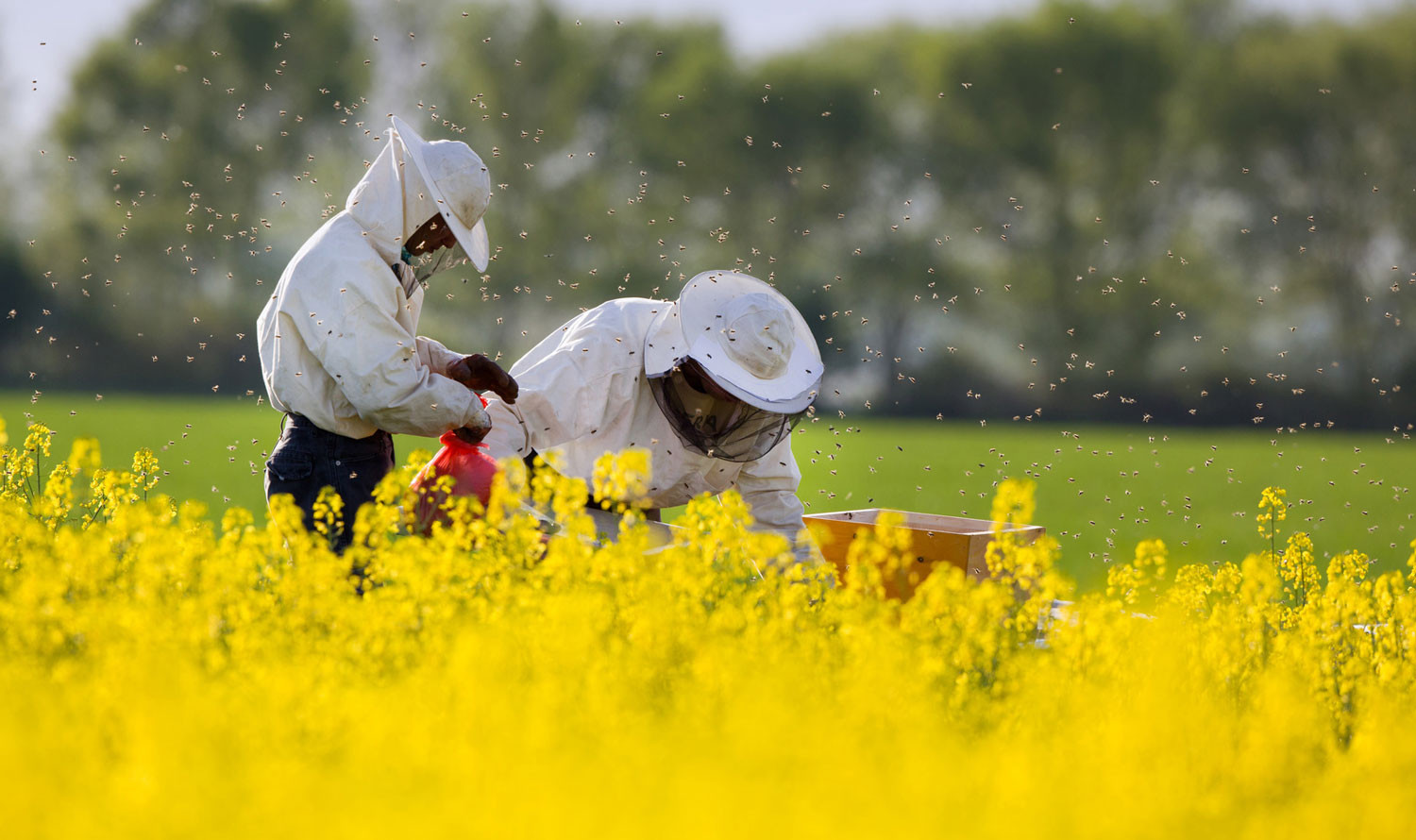


Flower strips support bees

Nutrition appears to play a particularly important role in the health and immune defences of bees. They must have continuous access to nectar and pollen. However, this requirement is difficult to meet in modern agricultural landscapes. Periods without nectar flow during the most intensive phase of brood rearing slow colony growth and result in increased susceptibility to disease.
Flower strips in agricultural landscapes – benefits for honey bees and wild bees
This paper evaluates the role of flower strips in improving food availability for honey bees and non-specialised wild bees in intensively farmed landscapes. The study focuses on the summer “nectar dearth” between late May and late July, a period when lack of floral resources can strongly limit colony development and pollinator health.
From 2011 to 2015, researchers at HAFL (School of Agricultural, Forest and Food Sciences, Switzerland) developed and tested seed mixtures specifically designed for flower strips. These mixtures aimed to provide continuous pollen and nectar supply during summer while remaining agronomically compatible with arable farming systems. They were intended to benefit honey bees, polylectic wild bees and key beneficial insects such as hoverflies and predatory bugs.
Field comparisons at 13 sites showed that flower strips attracted significantly more honey bees and wild bees during peak flowering than extensively managed meadows and, in many cases, as many or more than fallow areas. Pollen trap analyses demonstrated that honey bees actively collected pollen and nectar from flower strips, with buckwheat and phacelia sometimes accounting for more than 30% of the pollen intake.
Flower strips supported a high diversity of wild bees, mainly non-specialised species, including many of the most important pollinators in Switzerland. They also proved attractive to beneficial insects involved in biological pest control.
A complementary case study conducted in 2015 with the bumblebee Bombus terrestris revealed that colony development strongly depended on proximity to flower strips. Colonies located farther away formed significantly fewer brood cells than those placed directly within or close to the strips.
In conclusion, flower strips are an effective tool to bridge the summer nectar gap. They enhance food resources for honey bees and non-specialised wild bees, support beneficial insects and may reduce competition for floral resources in agricultural landscapes. They are best seen as a complement to, not a replacement for, other biodiversity promotion measures.
See also:
- Safeguarding pollinators
- Practical Guide: 3.2 Dearth periods
- Beekeeping value of forage plants
- How do bees choose pollen?
- Pollen consumption and colony development
- The warmth of flowers