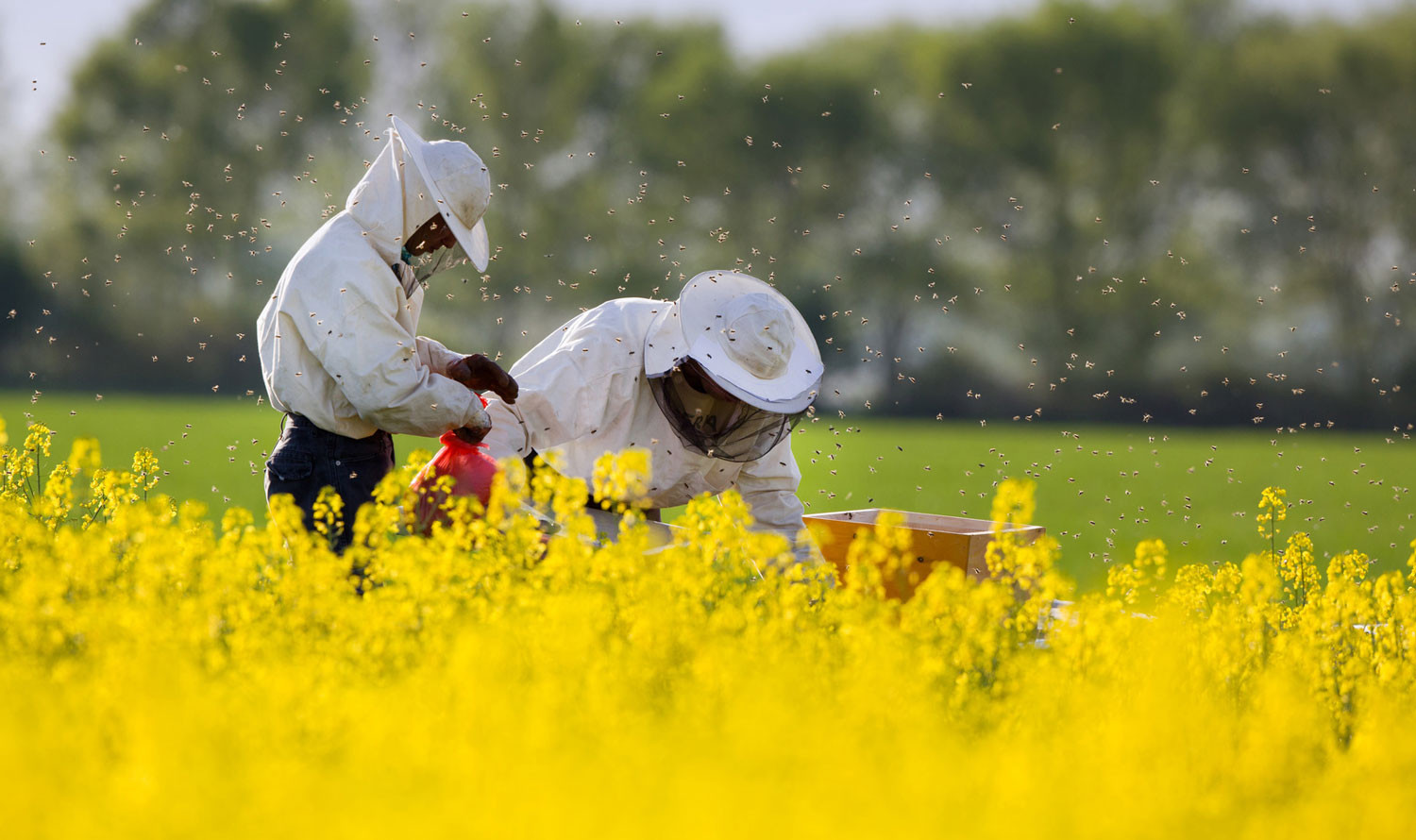


October at the apiary

October marks the transition to wintering: major tasks are complete, but a few checks remain crucial. These mainly involve verifying food stores, colony strength, varroa mite infestation, and apiary protection, and then minimizing disturbances. The goal is simple: to enter winter with healthy, compact, and well-prepared colonies.
1. The month's priorities
- Carry out a last short but precise inspection before overwintering.
- Check the queen, brood, stores and health signs before ending the season.
- Reduce unnecessary volume, fit the mouse guard at the entrance and limit moisture.
- Check the natural mite drop after the summer treatments.
- Decide quickly on the future of colonies that are too weak, queenless or doubtful.
2. October at the apiary: the month's guiding idea
 |
Objective |
In October, the colonies gradually enter the overwintering phase. Laying often decreases, the winter bees become the central element of colony survival, and natural resources grow scarce.
The month's common thread is simple: check what determines the winter, correct what can still be corrected, then no longer intervene without a clear reason. The scope for action diminishes quickly with cold, moisture and reduced bee activity.
In October, you must reason first according to the reality of the apiary rather than the date: altitude, weather, colony strength, hive type and the probable length of winter strongly modify the decisions. What is still possible in the lowlands in mild weather may already be too late in the mountains or for a small unit.
At this time, an unnecessary disturbance can be costly: prolonged opening, moving combs, late splitting, a poorly prepared uniting, or handling an already weakened colony can heighten its stress and accelerate its decline.
Further reading
3. The month's priority tasks
3.1 Carry out the last autumn inspection
 |
Objective Ensure that each colony has a functional queen, brood that is plausible for the season, sufficient bees, a volume proportionate to its population and accessible stores. |
What to look at
The presence of eggs or open brood while the colony is still rearing, the brood pattern of the capped brood, the bees' coverage of the brood, the absence of suspicious odour, abnormal larvae, worryingly patchy brood or bees with deformed wings.
Practical actions
Open only if conditions allow: ideally around 15 °C or more, in calm, sunny weather. If not, give priority to external checks, the weight of the hive and observation of the floor. A central comb and the neighbouring combs often already give a good picture of the situation.
Points of caution
An overly long inspection needlessly chills the colony and disrupts its internal organisation. If foulbrood or another serious disease is suspected, do not unite the colony with another: have the health situation checked by the bee inspector before any decision.
Further reading
3.2 Decide on the queens and the weak colonies
 |
Objective |
What to look at
The presence of recent laying while the colony is still rearing, or failing that, consistent indications of a queenright colony. In October, the absence of visible laying is not always abnormal: it must be interpreted together with the weather, altitude, the queen's age and the colony's general dynamics. To watch: the quality of laying, the colony's real strength, the number of well-occupied combs, general behaviour and the signs of queenlessness or of a drone-laying colony.
Practical actions
Check in particular the colonies that requeened after the summer treatments. Compact laying in October is a good sign. A queen resulting from a late requeening may be marked if this can be done without excessively disturbing the colony. Colonies that are too weak but healthy can still be united with judgement.
Points of caution
A queenless, drone-laying or very weak colony has little chance of surviving the winter on its own. After a late requeening, a virgin or insufficiently mated queen is a critical point: mating opportunities decrease at the end of the season and the time to correct a failure is short. Introducing a mated queen in October can work in certain situations, but the time to correct a failure is short. Never unite a diseased colony with a healthy colony.
Further reading
3.3 Reduce the hive space and physically prepare for overwintering
 |
Objective |
What to look at
The volume actually occupied by the bees, the position of the stores in relation to the future winter cluster position, empty or very old combs, the state of the crown board, the stability of the hive and the risk of mice entering.
Practical actions
Reduce colonies that are too loosely housed, remove unnecessary combs if this can be done without disorganising the colony, insulate the top when the hive system and local climate justify it, adjust the mouse guard or reduce the entrance depending on the equipment used. The hive must remain protected from wind and rain while allowing proper management of moisture.
Points of caution
Cold alone is rarely the main problem: moisture, overly large volumes, poorly placed stores and poorly protected entrances often cost more. An entrance must not be completely blocked: the bees must be able to ventilate and remove the hive debris when the weather allows.
Further reading
- Practical Guide: 4.3 Overwintering
- Insulating hives put to the test of the bees' collective thermoregulation
- The winter cluster
4. Bee health
 |
Objective |
What to look at
The natural mite drop after the summer treatments, the signs of varroosis in the colony, bees with deformed wings, patchy brood, uncapped cells, dead pupae and the rapid weakening of a colony that seemed all right in September.
Practical actions
Check the natural drop on a clean floor insert and interpret the results within the varroa management concept followed at the apiary. If the load remains worrying, refer to the official recommendations and the authorised products, without improvising a late treatment. Dead or collapsing colonies must not be left open at the apiary, in order to limit robbing and the possible redistribution of varroa mites or pathogens.
Points of caution
In October, a heavily infested colony may still look fairly populous, even though its winter bees are already compromised. Late treatments do not always make up for an insufficient summer strategy. The observed drop cannot be read in isolation: after a treatment there is a lag between the intervention and the mite drop. One must therefore take into account the time since treatment, the trend over several days and the colony's clinical signs. A mild autumn can prolong laying, increase consumption and alter varroa dynamics: one must therefore look at the living colony, not only the calendar.
During the last inspection, you must also remain attentive to signs of brood diseases: very patchy brood, abnormal larvae, suspicious odour, chalkbrood mummies or symptoms consistent with foulbrood. If in doubt, do not unite the colony with another and have the health situation checked by the bee inspector before any decision.
Asian hornet
In October, Asian hornet activity may still persist at the apiary, sometimes on cool days when the bees fly little, especially in the affected regions. The nests may also become easier to spot after leaf fall. If pressure at the entrance is confirmed, a meshed entrance or a protective grid may remain useful, but trapping is not a standard measure. If in doubt, observe, photograph and report on frelonasiatique.ch, without intervening directly on a nest.
Further reading
- Practical Guide: 1.5.1 Measuring the natural mite drop
- Emergency treatment in autumn: with or without brood is not the only question
- Asian hornet: how to recognise it and what to do at the apiary?
- Recognising bee diseases
- Practical Guide (poster): 2 How to recognise diseases
5. Stores and current resources
 |
Objective |
What to look at
The weight of the hive, the number of food frames, the position of the stores in relation to the bees, the presence of a food wreath and the differences between lowland, mountain, production colonies and small units.
Practical actions
As a practical benchmark, for a 12-frame Dadant-Blatt hive, one often aims for roughly 4 brood-box combs well filled with stores in the lowlands and 5 combs in the mountains. These benchmarks must be adapted to the hive system, the altitude, the probable length of winter and the colony's strength. If the stores are a little tight, make the most of the last fine days to correct this, without needlessly prolonging the season. These values must be adapted to the hive system, the altitude, the probable length of winter and the colony's strength. If the stores are a little tight, make the most of the last fine days to correct this, without needlessly prolonging the season.
Points of caution
Liquid feeding given too late may be poorly taken or poorly processed. If a liquid supplement is still necessary and the weather still allows it, use a concentrated syrup, for example around 70 %, according to the recommendations followed. Late liquid feeding, too dilute or given in cold weather, may be poorly processed and increase moisture problems. Abundant stores that are far from the cluster position may remain inaccessible. Late honeydew flows or particular resources must be interpreted with caution according to the local context.
Further reading
- Principles of feeding bees
- Practical Guide: 4.2 Feeding
- Practical Guide: 4.8.2 Hive floor debris check
6. In the workshop / organisation
 |
Objective |
Sort the removed combs, melt down combs that are too old or doubtful, store combs and supers protected from wax moth, moisture and rodents. Clean the feeders, crown boards, grids and equipment used during treatments.
Update the hive record sheet: strength, queen, stores, treatments, natural drops, health anomalies and decisions taken. These notes will be valuable for understanding how the colonies come out of winter in spring.
Further reading
7. What we do not do now
 |
Objective |
- Do not multiply openings or heavy manipulations: at this time, unnecessary stress can weaken an already fragile colony and compromise its overwintering organisation.
- Do not create new colonies: it is too late to build a reliable overwintering unit.
- Do not keep a very weak colony out of hope alone: a well-considered uniting is often better than an overwintering doomed to fail.
- Do not unite a diseased colony with a healthy one: the health risk takes priority.
- Do not treat against varroa at random: check, interpret, then act according to the recognised recommendations.
8. Depending on the context
 |
Objective |
In the mountains, overwintering often begins earlier: stores, reducing and protection must be anticipated. In the lowlands, a mild October may give the impression that there is plenty of margin left, but it may also prolong laying, increase consumption and maintain later varroa dynamics.
Nuclei and small units require particular attention: less volume, fewer available stores and less thermal inertia. They must not be managed like strong production colonies.
October is no longer the month of major work, but that of the last useful decisions. A colony ready for winter has a functional queen, enough bees, accessible stores, controlled varroa pressure and a hive adapted to its strength.
► The other months...
| January | February | March | April | May | June | July | August | September | October | November | December |